As I start to write this I don’t know where it is headed, but I have to write it. Perhaps I may never share it.
I have not experienced war. Sure, I have seen movies, even documentary clips, and I’ve read a bit. But I’ve never smelled the decaying bodies, seen the ripped flesh and bones or heard the cries of the family members of those slaughtered. So what do I know. This morning’s news:
At least 400 Palestinians were killed in Gaza in the last 24 hours, according to the Hamas-run health ministry, and 70 were killed overnight on Sunday in bombardments of the densely populated Jabalia refugee camp and streets close to two hospitals in Gaza City.
Early on Monday, the Israeli military said it had hit more than 320 “military targets” in the last 24 hours, and that ground forces had conducted “limited raids” to kill gunmen and search for hostages. Hamas said the day before that it destroyed an Israeli tank and two armoured bulldozers inside the territory, which it has ruled since 2007.(The Guardian, October 23 )
-----
A United Nations investigation has found further evidence that Russian forces committed “indiscriminate attacks” and war crimes in Ukraine, including rape and the deportation of children to Russia.
“The collected evidence further shows that Russian authorities have committed the war crimes of wilful killing, torture, rape and other sexual violence, and the deportation of children to the Russian Federation,” a United Nations commission of inquiry on Ukraine said in a report submitted to the UN general assembly.(The Guardian, October 23, 2023)
My experiences with war come through others. A cousin, returned from the Korean War, whom I shared a bedroom with as a young boy, had many scars of shrapnel wounds which plagued him his whole life. Later, I grew to understand some of the mental and emotional wounds he also suffered. But he never spoke to me about them. Perhaps I was too afraid to ask. Veterans of the Vietnam tragedy I lived with in my early 20s, shared a few sanitized memories of their times at war as have other veterans I’ve met over the years. But I have never experienced war.
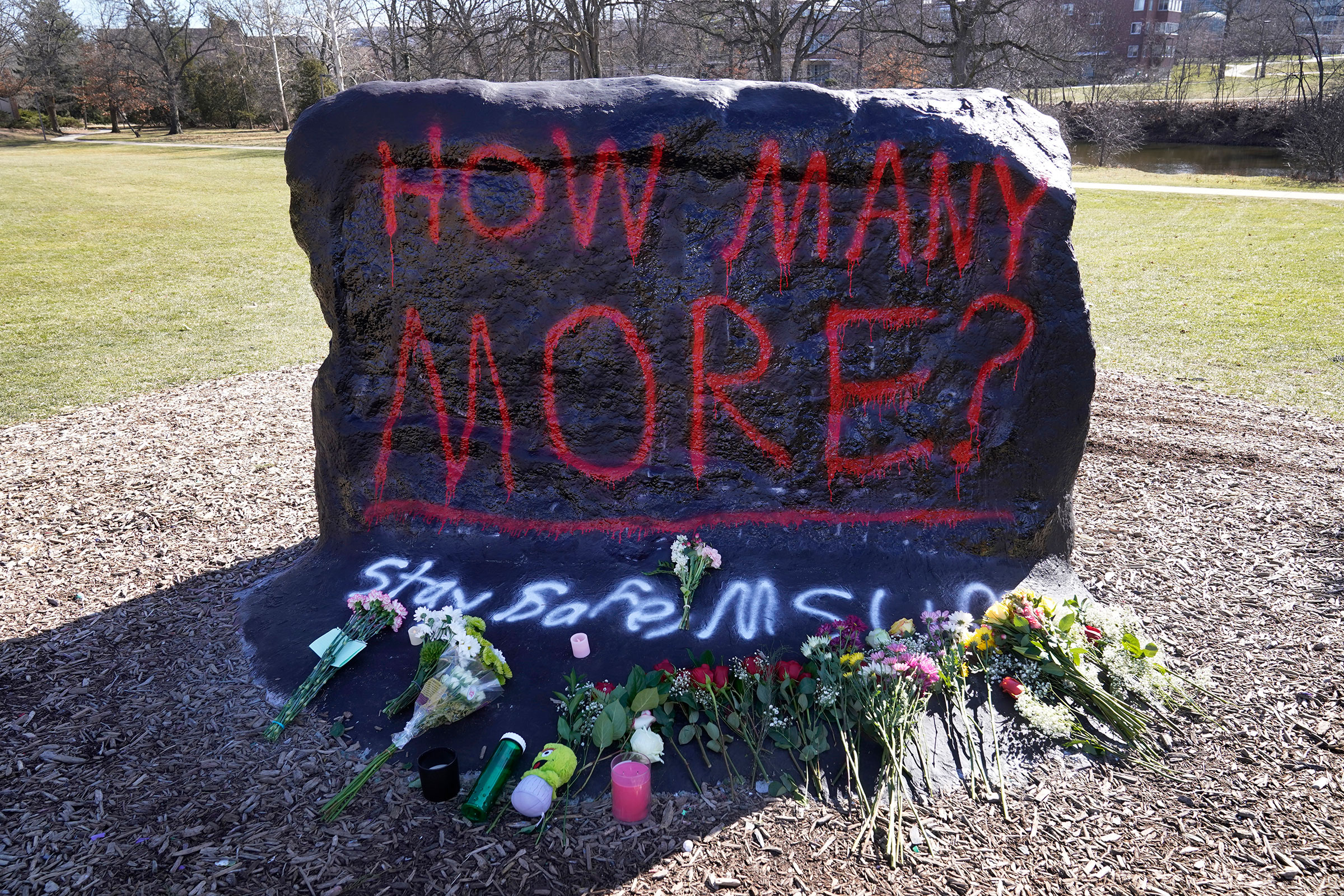
The one bone-chilling experience I experienced that might have more viscerally awakened me to the real terror of war, was the murder of a young man a few hundred feet away on a cold November morning in 1970 on the campus of Wayne State University. A little context to this as I recall it 50+ years ago. I was struggling with school, wrenched with trying to understand how to stop a senseless, illegal war in Vietnam. I was changing my major every term, I was involved in the birth of a Free University, including beginning a class on nonviolence. Anyone could facilitate courses, what we now label as ‘co-learning’ groups, around any topic. I was also a draft counselor assisting others in finding ways to avoid being sent off to Vietnam and had filed my own conscientious objector application months before.
On this particular day, I had arrived on campus early, and bought my typical coffee at the student union. Having finished it and reading the student newspaper I began to walk from the Union to State Hall. It was early, maybe 8:30-9:00, and the campus mall I was walking across was sparsely occupied. The chill in the air was notable, but I was warm with a long wool overcoat wrapping me up. To my left near the Library I heard two, or was it three, loud bursts. I looked to see someone falling and another running away towards Cass avenue. I reacted, I didn’t think. I ran to the fallen victim, a youngish, maybe 17 or 18 year old African American. He was breathing, but he was choking on blood. I held his head up hoping it would help him, telling him that help was on the way and that he’d be ok (I really had no clue). He was shaking. I took off my coat and put over him and gently re-lifting his head in hopes of preventing him choking on the blood. Another person came by and ran to call police. Within perhaps 10 minutes they arrived and I was shunted out of the way. Once the ambulance arrived, I asked if I could get my coat back. I did.
I don’t remember the police talking to me then, or getting my name, but maybe I recounted to them what I saw. That part is definitely foggy. Although to this day I remember the young man’s face and especially his eyes like it was yesterday. I was walking around that day and surely for a week or more, as if in some dense fog, trying to make sense of this experience. Trying to fit myself into this crazy and too violent world. The young man died with 24 hours of the shooting. News account suggested that the shooting was the remnant of game of pool the night before that upset the shooter.
A singular shooting like this is certainly not the same as a war with many bodies strewn across landscapes. Yet, that I can still feel the torment of that experience 50 years later reveals an indelible truth to me: that killing and war are, as veteran war correspondent Chris Hedges writes, “The Greatest Evil”.
I’ve been pushing myself slowly through his recent book The Greatest Evil is War, and in so doing reflecting on current wars in Ukraine, Israel, Palestine, Sudan, and so many more. Why do we keep on thinking that “only killing shows killing doesn’t pay” as 60’s folk singer Phil Ochs sang about capital punishment? Why is even the urging of a ceasefire objected to (the U.S. vetoed a recent attempt at the United Nations Security Council!!)? Does one need to see and smell the destruction firsthand? To experience the fear of impending death or grave injury? To hold their dying family member in their arms?
I surely can’t adequately summarize Hedges’ recent book or his many other works that rip open the veil of war. Short of being on the battlefield, Hedges depictions and his deep reflections on the sources of war should be required reading for all potential recruits and their families. I will share a couple of excerpts:
I know the instrument of war. War is not politics by other means. It is demonic. I spent two decades as a war correspondent in Central America, the Middle East, Africa, and the Balkans, where I covered wars in Bosnia and Kosovo. I carry within me the ghosts of dozens of those swallowed up in the violence, including my close friend, Reuters correspondent Kurt Schork, who was killed in an ambush in Sierra Leone with another friend, Miguel Gil Moreno de Mora.
I know the chaos and disorientation of war, the constant uncertainty and confusion. In a firefiight you are only aware of what is happening a few feet around you. You desperately, and not always successfully, struggle to figure out where the firing is coming from to avoid being hit.
I have felt the helplessness and paralyzing fear which, years later, descend on me like a freight train in the middle of the night, leaving me wrapped in coils of terror, my heart racing, my body dripping with sweat.
I have heard the wails of those convulsed with grief as they clutch the bodies of friends and family, including children. I hear them still. It does not matter the language. Spanish. Arabic. Hebrew. Dinka. Serbo-Croation. Albanian. Ukrainian. Russian. Death cuts through linguistic barriers.
I know what wounds look like. Legs blown off. Heads imploded into a bloody, pulpy mass. Gaping holes in stomachs. Pools of blood. Cries of the dying, sometimes for their mothers. And the smell. The smell of death. The supreme sacrifice made for flies and maggots.
I was beaten by Iraqi and Saudi secret police. I was taken prisoner by the Contras in Nicaragua, who radioed back to their base in Honduras to see if they should kill me, and again in Basra after the first Gulf War in Iraq, never knowing if I would be executed, under constant guard and often without food, drinking out of mud puddles.
The primary lesson in war is that we as distinct individuals do not matter. We become numbers. Fodder. Objects. Life, one precious and sacred becomes meaningless, sacrificed to the insatiable appetite of Mars. No one in wartime is exempt.
I am wrestling with the same demons that troubled me 50+ years ago and I still don’t have a good handle for how to steer us away from war and violence. We surely have more bread and circuses that distract us from staring at the terror of actual war and violence. Sure, I write letters, sign petitions, organize programs, pass along the wisdom I bump into, even phone our representatives asking them to reject war and militarism and to address the accelerating crises of climate change, income inequality, and attacks on democracy. No doubt this is another struggle that will outlast me, yet I feel compelled to continue to search for nurturing the seeds of true peace.
As Qunicy Institute President, Andrew Bacevich notes today in his post synthesizing his new book, we need to realize that “To solve our problems requires that we see ourselves as we really are.” From the safety of our sofas and central heating we need to stir ourselves awake to all that is unraveling and join with others to end violence and war upon each other and the planet that is our home.