Saturday, November 3, 2018

The Limits of Our Thoughts


The reading pile keeps getting bigger. Each morning upon grabbing the coffee and nestling into a corner of the couch, I reach for one of the books in my reading pile. On the coffee table in front of the couch are the magazines that pile up – The Sun, The Atlantic, The Nation, Yes Magazine.


Today I grabbed a recent addition to the book pile, Stephen Walt’s new The Hell of Good Intentions: America’s Foreign Policy Elite and the Decline of U.S. Primacy (2018).

The Hell of Good Intentions

It’s one of the best reads of 2018 if not the 2000s. I’ve got two chapters left, about 70 pages of the 360 ( 70 pages are notes, themselves worth reading). Anyone interested in foreign policy should read this critique of the “establishment” since WWII through early 2018 and why policy alternatives to what Walt, describes as “liberal hegemony” never seem to change whether Clinton, Bush, Obama or Trump sits in the oval office. Stephen M. Walt is the Robert and Renee Belfer Professor of International Affairs at Harvard University.

Also in the pile and partially read are:


Also in the pile but not yet started other than the introductions are
George Orwell. TheRoad to Wigan Pier (1937) which Ellen just read and highly recommended it for it’s pertinence.

Gretel Van Wieren. Food Farming and Religion: Emerging Ethical Perspectives (2018) Stumbled upon on the new book shelf and noted that author was an MSU professor (I have not met) but in the intro she highlights work of two other MSU profs I do know.

Peter Plastrik and John Cleveland. Life After Carbon: The Next Global Transformation of Cities (2018)

Noam Chomsky. Who Rules the World (2016)

I often wonder how the brain and impulse drive the selection of items for the pile and how it then integrates the ideas as I read them. Based on past experience I may not finish all of them, and certainly as the Walt book shows, some other title will get added to the pile and potentially take precedence over others. Usually when that happens,  like Walt’s book, the writing is excellent and ideas more compelling or perhaps fresh, innovative or at least new to me.

I admittedly don’t absorb anymore the full detail as I read the pages. I tend to carry forward the general intent of the book along with its tone. In some cases I note certain quotes and page references for possible future use. In many cases the references lead to other titles added to the pile or websites to investigate.

I recognize all this as a privilege that I have, or at least make the time, to delve into this playground of ideas. Of course, scholars like Walt or the others represented in the pile, dedicate even more of their time and energy into delving deeper into segments of the world of ideas than I do. But most of those are within a narrower band width of human thought than I can manage. So it intrigues me as I interact more and more with elected officials and their staff, to consider how much they read, how limited that time is and perhaps again how narrow the area of focus.

Mr. Trump, who appears to celebrate not reading, except teleprompters,  is at the abysmal end of this scale. But what of Senator X,  Representative Y, or foreign policy staffer Z.  How many books have any of them read in the past year? What is the longest policy report they have completely read from an academic journal, think tank, or government agency? It concerns me that the responses would be closer to Trump than to Walt, or even me. While Walt doesn’t discuss this information deficit directly thus far in his book, his notion of how the foreign policy elites constrain the limits of consideration helps me understand why new ideas, or even the reconsideration of failed policies, seem “foreign” to most elected officials.

Expanding our horizons and possibilities in our increasingly complex world through reading of serious, thoughtful, and sometimes lengthy writings might help all of us appreciate the limitations of our electoral system and those that represent us. Ignorance is not bliss.

Sunday, September 16, 2018

To Rally or Not to Rally?


As I approach this week the “Stand Up for Peace” rally that I have been helping to plan for months, I began to think about what drives people to attend rallies or to stay home. As someone who has not planned a rally before but who has participated in many over the decades, I started to wonder about all the folks I know who hold very similar beliefs about the state of our world but whom I have never seen at a rally for these same causes.

Image result for peace quest


Of course, the basic reasons that come to mind include conflicts with work or other schedule commitments, fear of crowds, lack of confidence that the event will have any impact, etc. All are reasonable responses. But many of these same folks are retired, or in this case, our rally overlaps with the lunch hour. Fear of crowds, if one has never attended a rally, are based on an abstract fear. With the unusual exception of throngs of 500,000–1,000,000, as at the Women’s March of January 2017 in Washington, where I saw and felt that the density of people posed a potential for danger, I have never experienced any such concerns.

Image result for women's march 2017

The question of effectiveness raises perhaps a more challenging reason from those who do not attend rallies. How does one measure effectiveness? Is the policy issue(s) raised by the rally addressed within days or weeks of the rally? Rarely if ever would be my best guess. Even if policy changes in six months or a year, can one say the rally made it happen? Certainly not by itself. So why bother with all the planning and hoopla if there is no immediate remedy provided by the rally action?

Herein lies my response and why I have thrown the bits of myself I could muster into organizing this rally for the International Day of Peace next Friday at the State Capitol. I’ll begin this response to concerns of effectiveness of rallies with a quote from perhaps our greatest living writer, Rebecca Solnit.

Causes and effects assume history marches forward, but history is not an army. It is a crab scuttling sideways, a drip of soft water wearing away a stone, an earthquake breaking centuries of tension. Sometimes one person inspires a movement, or her words do decades later; sometimes a few passionate people change the world; sometimes they start a movement and millions do; sometimes those millions are stirred by the same outrage or the same ideal and change comes upon us like a change of weather. All of these transformations have in common is that they begin in the imagination, in hope. To hope is to gamble. It’s to bet on the future, on your desires, on the possibility that an open heart and uncertainty is better than gloom and safety. To hope is dangerous, and yet it is the opposite of fear, for to live is to risk.

Yes, this rally and any rally organized to address an issue is a project of hope. We can’t possibly know the outcome in advance. Even as I fill out forms for the folks managing the access to the State Capitol steps that ask how many attendees, I really have no clue. Who will feel their schedule of commitments (work, family, meetings, doctor appointments, etc.) will allow it? Who is willing to possibly go alone to be with strangers to participate in something they have never experienced and therefore are wary of? Who will feel strongly enough about the issue(s) being addressed that they would put aside other things to spend an hour or two in support of the rally’s purpose? I obviously don’t know. I guessed – 250-500, I said. Wishful thinking?


Cheesh, wouldn’t you think that thousands would be willing to come out for a rally titled “Stand Up for Peace” celebrating the global International Day of Peace? Yes, part of me does. But there have been few rallies at the State Capitol I have attended in the past year that have passed that threshold, so I doubt it. Everyone wants peace, but few are willing to do the work necessary to build it.

So let me add two other considerations for you to think about next time there is a rally in your community that aims to address issues you agree with.

1)    The larger the attendance the more coverage by media to the issue and proposals that emanate from it. The larger audience itself expands the message as they leave and talk to those in their circles about the issue(s) and options they heard. The idea gets seeded. This affirms the insight Milton Friedman offered to his conservative cohorts years ago.

"Only a crisis - actual or perceived - produces real change. When that crisis occurs, the actions that are taken depend on the ideas that are lying around. That, I believe, is our basic function: to develop alternatives to existing policies, to keep them alive and available until the politically impossible becomes the politically inevitable.“
Milton Friedman. Capitalism and Freedom, p.2 (cited in Rob Dietz and Dan O'Neill, Enough is Enough, 2013).

2)    Those with enough hope, who pull together the resources to hold rallies and events to seed ideas or keep them alive, are fed by those who bother to attend and participate. This in fact becomes a huge energy transfer. This energy is needed to propel society forward. Your participation feeds the larger energy towards peace. In sharing one’s energy, one is also fed by the community and solidarity of strangers committed to creating a better world.

I say all this to you because hope is not like a lottery ticket you can sit on the sofa and clutch, feeling lucky. I say this because hope is an ax you break down doors with in an emergency; because hope should shove you out the door, because it will take everything you have to steer the future away from endless war, from the annihilation of the earth’s treasures and the grinding down of the poor and marginal. Hope just means another world might be possible, not promised, not guaranteed. Hope calls for action; action is impossible without hope… To hope is to give yourself to the future, and that commitment to the future makes the present inhabitable.  -
Rebecca Solnit, Hope in the Dark

Ask anyone who attended the Women’s March on Washington on January 2017 if they were moved by the energy. Get out and support peace, not only on the International Day of Peace, September 21. But every chance you get.It's the only way to get there.

Sunday, July 22, 2018

Steps Toward Possibility

I keep stumbling along, bumping into ideas either new to me or reformulated to feel new. Of course, it could be that my memory is so bad I've been there before but can't recall it. Like the movies I check out from a local library only to be told by my better half that we've already seen that one.

Much of what follows stems from or was inspired by the pile of books I'm working my way through. The current reading list includes: Graham Riches, Food Bank Nations: Poverty, Corporate Charity and the Right to Food (2018); Richard Falk, Humanitarian Intervention and Legitimacy Wars: Seeking Peace and Justice in the 21st Century(2015); and Barry Knight, Rethinking Poverty: What Makes a Good Society (2017). Sprinkled among these books are countless articles from many sources covering a wide gamut of subjects.

Each of these works is trying to address what the author sees as a serious flaw in our current human predicament. They begin with an analysis but they all end up with suggesting new possibilities. While there is much in their analyses that is fresh and insightful (to me), I am more energized by their belief in possibilities beyond our current dilemma. This is the root impetus for the creation of Possibilitator nearly six years ago - to imagine possibilities for a better world. If one is unable to imagine a different/better world, one will likely not pursue any effort to change it.

Food Bank Nations: Poverty, Corporate Charity and the Right to Food (Paperback) book cover

Graham Riches is a professor emeritus and former director of the School of Social Work at the University of British Columbia. He began writing and researching "domestic hunger and the import of charitable food banking" in the 1980s. In this work he brings together that knowledge with a broader look across OECD countries and their approach to addressing hunger.

       Whilst food drives and fundraising are built around themes of 'ending'  or 'alleviating' hunger, the strategies of corporate food banking are a long way removed from the goals of food and social justice and from advocating for a living wage let alone adequate welfare benefits. The fact is that mainstream food banks have become dependent upon the corporate good will of the industrial food system. Feeding America has been a powerful catalyst for the corporate capture and national consolidation of charitable food banking in the United States an idea which has been emulated and acted upon within other OECD food bank nations.(p.54)

I saw this first hand during my tenure as an executive director of a local food bank, and even now as a volunteer at our local food pantry. Riches gives us a history lesson as well as a deeper social, economic, and political analysis of this development among the wealthiest nations. Ending hunger is still at the top of the list of the UN Sustainable Development Goals agreed to by all 193 member nations of the United Nations including hunger in the developed nations of the OECD. As Riches amply notes, ending hunger via food banking is offering a tailpipe fix of a symptom without addressing the fundamental causes. I am only a third of the way trough the book, but I can see from the chapters titles to come that he won't leave me looking for suggested remedies.


Rethinking poverty

Barry Knight is co-chair of the Working Group on Philanthropy for Social Justice and Peace and the author or editor of14 books on poverty, civil society, community development and democracy. This little gem of a book (161 pages) is based upon extensive research into the causes of poverty as well as the remedies that have been tried. The research was carried out by the Webb Memorial Trust in the UK involving leading organizations, academics, community activists, people kin poverty, children and surveys of more than 12,000 people.

Like the other two titles under review here, Rethinking Poverty's  tone is one that is both steeped in research, but humble in prognostications. An appreciation of the complexity of society leads to an understanding that there is no silver bullet. Yet, the research finds promise in having communities focus on what should be the basis of a "good society". From that evolved a consensus belief that a direction based upon these five driving principles holds some promise:

      1)  We all have a decent basic standard of living.
      2)  So we are secure and free to choose how to lead our lives.
      3)  Developing our potential and flourishing materially and emotionally.
      4)  Participating, contributing and treating all with care and respect.
      5)  And building a fair and sustainable future for the next generation.

Obviously, the research from the Webb Memorial Trust would not have begun if someone didn't believe there must be a better way to eliminate hunger. Believing is possibility is perhaps the first step in any change, either within our selves or for society as a whole. Surely this was the case for ending slavery, giving women equal rights, or recognizing that planting trees might help slow ecological unraveling. The author suggest that the research shows that re-framing the question of poverty away from the negative towards a more positive frame of 'what does a good society look like' has more potential to unleash creativity, find consensus, and offer a way forward.


product-image

Richard Falk is still pumping out ideas about building a better world via international law and justice as he approaches his 88th birthday later this year. One can visit his active blog to follow his thoughtful and perceptive thoughts on contemporary global issues. In this 2015 collection of essays he delves into the very turgid area of humanitarian intervention. How might we balance the sovereignty of nation states with the 'right to protect'? What might international legal reforms help reduce the need for humanitarian intervention?

As informed as he is from his storied career in international legal affairs, Falk still uses the tone of possibility, not certainty in dealing with human affairs. This is refreshing given all the strident posturing that typically goes with the territory. Even in areas where he holds firm moral beliefs, e.g. Israel/Palestine, he recognizes the complexity.

     It seems clear that 'the responsibility to protect' norm is becoming an accepted part of customary international law, but its implementation  in specific instances is not a reflection of its status in law. It remains primarily dependent on mobilizing the political will of states, especially dominant states, which can be pushed just so far by an aroused public opinion calling for protective action. At present, such a political will is not likely to be supportive of humanitarian intervention unless it coincides with significant strategic interests. (p.59)

As we celebrate the 70th anniversary of the UN Declaration of Human Rights, we should recognize what the imaginative powers Eleanor Roosevelt and other key promoters of the idea brought to fruition by dreaming a better world for all was possible. It's long past time to remove the wet blanket that Margaret Thatcher and her sidekick, Ronald Reagan, threw over our societies that "There is No Alternative" to neoliberalism.


Working our way through the possibilities is still difficult and time-consuming work that must involve us all as a human family.  The five principles suggested by work of the Webb Memorial Trust listed above which dovetail  nicely with the Global Sustainable Development Goals might well give us a place to start to do that work together. It's possible!!

ONWARD!!


Tuesday, June 12, 2018

Nuclear diplomacy in the age of Trump


TrumpKim

Less than twenty-four hours since Mr. Trump and Mr. Un shook hands, many pundits are critical of  the outcome. I am certainly no fan of  either of these two national leaders. Trump defines arrogance and narcissism as well as any public figure. His braggadocio is so untethered to reality that it's difficult to believe anything he says (or tweets).

But, for whatever reason, he has resisted (thus far) a military solution to this vexing problem, and that is a very big deal as we might pause and reflect on the 17 year old war in Afghanistan that has gained nothing for anyone except the arms lobby. I am not sanguine about the possibility of him triggering a military encounter with Iran or some other "evil empire" du jour. The chances of that disaster became higher with the elevation of Mike Pompeo and John Bolton in his administration. But for the moment, he has resisted flexing his military macho side.

It seems pretty obvious that North Korea has had a target on its head since at least the days of George W. Bush's "Axis of Evil" claim. Regime change from the US has been the driver for pursuit of a nuclear missile as a possible barrier to a US led first strike. I can't imagine a sane person, giving that up, especially with the example of what the US did with Qaddafi after he relinquished his nukes. Trump's aversion to building a lasting trust does not bode well for a total denuclearization of the Korean Peninsula. If you were North Korea, would you trust any deal made with Trump? Still, I applaud the diplomatic effort both sides have made. It's better than war!!!!

I certainly would be surprised if we see any movement on global arms reductions, let alone nuclear weapons, during this administration. Would even his pals, the Russians, trust him on a nuclear deal? His former allies, Britain and France, are probably not likely to believe much of what he proposes, especially after last weekend. Diplomacy needs trust to work and the absence of this arrow in his quiver suggests we will have to wait for a later administration to try and resurrect arms control.

But while Trump is clearly a champion of American Exceptionalism, the failure of the Congressional members of both parties to reconsider the sword of Damocles that nuclear weapons hangs over humanity (and all other species we share this special planet with) suggests our political leaders of both major parties suffer from the same toxicity of American Exceptionalism.

The US remains in the global driver's seat of weapons ownership in both nuclear and conventional weapons. As Trump proclaims, others should fear the US for both our military might and our economic power. A perfect example is the threat we use in the UN to hurt any country that doesn't vote with us. While President Obama spoke collegially about global partnerships and even hinted at nuclear weapons reductions early in his administration, he too fell into the muck of nuclear madness, proposing to spend $1.2 trillion over thirty years to rebuild the nuclear arsenal.

We need a statesperson that can get out of the muck and begin discussions with other sane members of the global family on ridding the world of these weapons, not just for lowly North Korea, but with all the nuclear nations - Russia, US, Britain, France, China, India, Pakistan, Israel. As the first and only nation to use a nuclear weapon, we have a special responsibility to lead the world in abolition and destruction of the weapons that are only meant to destroy entire communities and every living thing in them.


Two Nobel-winning nuclear experts say that North Korea shouldn’t be alone in giving up nukes via Two of IPPNW’s founders, Drs. Jim Muller and John Pastore, have begun a dialog with North Korean mission in New York

Where are our political leaders? $1.2 trillion, plus whatever Trump tries to boost the pot with could be used for so many good things. Each of the other eight nations could also redirect their own funds saved from de-nuclearization into their communities to make life better for all. Every candidate for federal office should be forced to answer how they will end nuclear arms. What steps should the US be willing to lead with?

A little less than one year ago, 122 nations of the UN agreed to the Treaty on the Prohibition of Nuclear Weapons. Of course, the nuclear nations either voted against or abstained. How serious can they be about reducing and eliminating nuclear weapons. Words are cheap, but we're not even getting words for global de-nuclearlization out of American political leadership. What a travesty. 

ICAN logo

The folks at the International Campaign to Abolish Nuclear Weapons, winner of the 2017 Nobel Peace Prize call today's meeting "Good for Diplomacy, But Little Substance." 

ICAN’s Executive Director Beatrice Fihn said, “Trump just pulled off the photo-op of a lifetime. Rather than signing an unsubstantial agreement, Trump and Kim should be signing a real document based on international law, the Treaty on the Prohibition of Nuclear Weapons. The Treaty doesn’t tweet, it doesn’t change its mind on the plane home, and can’t have it’s ego bruised. It’s the only comprehensive, verifiable and irreversible way to achieve meaningful nuclear disarmament”.

Since our elected leaders won't lead, we need to join with citizen driven organization like ICAN and our local Peace Education Center to push for getting global nuclear disarmament back on the agenda of our media and the government.

Tuesday, June 5, 2018

A Search for Wisdom

The nearly two month absence in blogging is the biggest gulf since I started this activity some years ago. I think my small handful of regular readers probably appreciated the break.

I have certainly been reading and thinking but not much has jelled into anything approaching coherence in my mind. Maybe I have never been coherent  to the readers. I'm trying to understand why the notion to write arrives so irregularly, why The Muse avoids me amidst so much stimulation.

But here I am, trying to find a series of words worth sharing, worth someone else's time to peruse and ponder. What makes any of us think we have something so useful to share? There are so many great thinkers who have taken the time to capture thoughts and organize them and publish them over the centuries. Our libraries are full of them.


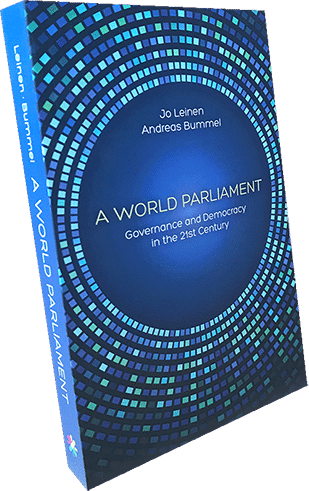
My most recently read book is a prime example, World Parliament: Government and Democracy in the 21st Century, Jo Leinen and Andreas Bummel (Democracy Without Borders, 2018) is, as international law scholar Richard Falk notes,  a seminal work. 400 pages of in-depth reading, thinking and organizing of the history of the idea of world parliament and its ebbs and flows to the current day. Supported with more than 1,000 footnotes, many I have highlighted to peruse as I get a chance (I picked up four books from the library today from those notes). Reading a book like this makes one really appreciate dedicated scholarship and care for the subject. The tone of writing, at least as translated so nicely into English by is welcoming. No stridency, but truly a search for wisdom that might help us figure our way forward together.

The authors offer no magic bullet, but they do offer some possible trajectories that give me, at least, a measure of hope. Hope that as a human family we can come together to wrestle with our globally shared problems (see for example the 17 Sustainable Development Goals the 193 member states of the UN have agreed to).
Democracy Without Borders


As I sit here tonight composing this brief foray into the current human condition, I recognize that the once bright shining light on a hill that America was supposed to be, or what the great American poet Langston Hughes hoped America could be "Let America Be America Again", it is not. In fact we are the biggest problem facing the human family. I say this because we have effectively given ourselves  a coronation as almost divinely inspired leader of the world = American Exceptionalism. We certainly were not democratically elected as such.

While founded on the principles of democracy for some (not women nor blacks) we don't consider that democracy should be applied globally. We frequently take exception to any international legal agreements that the bulk of humanity agrees. Heck, we even back out of agreements - see Paris Climate Accord, Iran Nuclear Agreement, etc. And, of course, we guaranteed ourselves a veto in all decisions of the UN Security Council,an exceptional device we were forced to share with a few other WWII victor states.

Militarily we have bases and troops stationed around the world pouring more money into military industrial complex than the next seven nations combined. If one of "our enemies" was to have a military base or floating warship as close to the US mainland as we are to many nations of the world we would throw a major hissy fit. History doesn't bode well for those who try and run a dominant empire for long. In pursuit of our myth of exceptionalism we have released more carbon, created more income inequality, and more social distress, while a select few prosper regally.

As a young boy I remember learning about virtues. For some reason the one that always stood out for me was "wisdom".  I figured if one had wisdom, one would naturally use all the other virtues in a balanced way. I have no real firm grasp of how one acquires wisdom. Some suggest that it comes with age or experience in the world. But, of course there is no guarantee. Some suggest that study will get us there, but that will likely only get us additional knowledge. And knowledge is not wisdom. Bernie Sanders explained this distinction well in debates with Hillary Clinton, where he noted she indeed had strong knowledge, but faulted her on her 'judgment'. Judgment is a key component of wisdom.

The authors of World Parliament while they surely do not claim any specific wisdom, have given us a glimpse of what it might look and feel like for the human family in the 21st Century as we try to find our way into a common future on a threatened planet. One of the undercurrents visible in their search for wisdom can be found I think in this quote:

A world legal system with a world parliament will not come about simply because it is ethically and morally superior to the present system of international law and because in any rational debate it has the more persuasive arguments. That may be a good starting position, but in and of itself it is of course not sufficient. The internal law expert Richard Falk has pointed out that '[i]n world order studies it is traditional to propose a better system of world order and then argue for its adoption. Such an approach tends to be "utopian" or "romantic" in the sense that it overlooks the transition from "here" to "there."' It was assumed that the better arguments would prevail. However, this dispute will not be settled in the debating clubs but in the political arena. 'Those who benefit from existing arrangements of power and interest', writes Falk, 'are unlikely to be swayed, except in marginal or cosmetic respects, by appeals based upon argument or values.' He argued that power can only be transformed only by countervailing power. 'No world order solution which presupposes the substantial modification of the state system can be achieved unless the advocates of the new system are aligned with important social and political forces within the existing world structure."

My hope is that we are wise enough to understand this before it is too late. The authors report that in world wide surveys as many as 72% of our fellow earthlings consider themselves "citizens of the world." Once the US citizenry can get beyond our self-appointed exceptionalism and truly commit to a global democratic system we may have a chance. But if we are to be successful in time, we better start pushing now.