Sunday, February 14, 2021

So Tired of Playing Defense


I’ve been moving myself through Gar Alperovitz’s stunning 1995 The Decision to Use the Atomic Bomb and the Architecture of an American Myth for the past month or so. This 843 pager (48 chapters plus appendices) with more than 2,600 footnotes is a compelling historical detective work. I’ve completed the first 46 chapters and 588 pages.

The 2,600+ notes do not include additional author notes sprinkled every few pages. It was one of these that led me to check out yesterday The Price of Vision: The Diary of Henry A. Wallace 1942-46 (edited by John  Morton Blum) and published in 1973. This is no lightweight volume either, coming in at 707 pages. One of the appendices that Blum adds is a speech, “The Way to Peace” that Wallace gave in September 1946 at Madison Square Garden that led to his firing by Truman.  Wallace was by all accounts a unique and interesting figure. One can’t help but wonder what the world would look like now, had not Roosevelt substituted Truman for Wallace as VP in 1944.

I read that 1946 speech and then a few minutes later read a report in a defense industry post I receive each weekday morning about the addition of a U.S. joint aircraft carrier strike force into the South China Sea. Wallace might have been a bit too idealistic in 1946 about the Russian threat, but the analysis he offered then, seems strikingly similar to the forces at play today. My concerns that President Biden’s administration would continue the militarism of the previous administrations suggests we are on the same conveyor belt which Wallace objected to, which benefits primarily weapons manufacturers. Even Eisenhower who was critical of that same force as most forcefully demonstrated by his farewell address, was controlled by it.

Who in government is willing to call it out today, besides a few members of the Progressive Caucus (see the new Defense Spending Reduction Caucus)? Biden’s cabinet selections on the foreign/military policy side are no doubt loyal to him and have largely hawkish resumes. If they dare to publicly speak otherwise, they would no doubt suffer the same fate as did Wallace 75 years ago. We need some courageous souls within government to call this out.

Many of us have been pushed into defensive postures over the past four years by attempts to dismantle American democracy. It has drained the energy of many. We might be tempted to relax our postures with the election of a liberal to the executive branch, but some myths of American exceptionalism die hard. While we must defend  against continued theft of our common wealth by the drivers of the corporate military-industrial complex, it is equally important that we offer real alternatives. As I have reflected in this blog frequently over the past, there are alternatives.

Let me offer one sterling example. The London School of Economics shared a wonderful webinar on Friday, featuring the amazing economist Kate Raworth, author of Doughnut Economics, which I have reviewed on more than one occasion. Listen attentively to her present a real alternative, now being adopted and applied in places around the world. She’s not a dogmatist. This is a framework that makes total sense with what we know about our world today. As we learn more, we may need to shift and adapt it, as she readily admits. But the possibility for a better world for all is there if we will look, reflect, and act to as Jean Luc Picard might say, “Make it so.” 

 https://www.youtube.com/watch?v=ku4AV2Ummq0


Friday, December 11, 2020

The Right to Read

Everyone reads a book a bit differently. The words of the author don’t change between readers, but the readers bring different experiences, understanding, worldview, emotions with them to the combination of words. No doubt, even the same reader can take the author’s words differently depending upon when they read them – again state of emotions, current conscious thoughts, context with current factors blending into a unique setting to absorb the ideas the author tries to convey.

If one is concurrently working through several books at the same time how does that reconfigure how we consume the ideas? How does the arbitrary choice of what to read impact the absorption of author intent?

Over the past two weeks I have either dabbled in or completed the following titles (listed in no particular order other than recall and actual sighting) as I compose this.

Paul Raskin – Journey to Earthland: The Great Transition to Planetary Civilization

Joel Bakan – The New Corporation: How “Good” Corporations Are Bad for Democracy.

David Dayen – Monopolized: Life in the Age of Corporate Power

William Irvine – Aha: The Moments in Life That Shape Our World

Rutger Bregman – Humankind: A Hopeful History

Hubert Hermans – Inner Democracy: Empowering the Mind Against a Polarizing Society

Grace Blakeley – Stolen: How to Save the World from Financialization

Frederic Gros – Disobey! A Guide to Ethical Resistance

William Irvine – The Stoic Challenge

Gregory Moore – Niebuhrian International Relations: The Ethics of Foreign Policymaking

Barbara Kingsolver – Poisonwood Bible

E.L. Doctorow – The March

Rebecca Solnit – Recollections of my Nonexistence

Let’s recognize from the outset, that this is an eyedrop in the ocean of books that could be piled next to me. Trying to describe how this current pile arrived on my table would take some time to reconstruct. Perhaps worthy of some effort, but not my immediate concern.

What is of central interest to me, is how this particular menu of reading choices affects my health – intellectual, emotional, political, social, etc. Additionally, each of these works, are built on the works of countless others (see the footnotes and references, frequently numbering hundreds with each title). The authors' willingness to read broadly and deeply and then to try and integrate these earlier thinkers is some serious work. It is work that often goes under appreciated. I appreciate it so much more as my ability to do what once came to me fairly easily, is evaporating too quickly. 

But even as I sit here composing this brief reflection, I recognize that there is some, as yet, unutterable union in this seeming disparate pile of books in front of me. I sense it deeply, yet I cannot find the words to name it. Perhaps I’m not able to step back far enough, to get that 30,000 ft perspective. What I can say is that their collective impact propels me forward in search of both deeper meaning and a desire to actualize or transform the meaning into actions to take. Whether those be ultimately personal actions, or actions that collectively we could take to move towards a better future, is likely what each author at their base level hopes their work might nudge.

I suppose that while it seems to be my disposition to relish looking more deeply into many things that book length studies require, many don’t share that fetish. They are evidently satisfied with more punctuated versions of understanding to make their way in this quickly changing world. It must of course, be admitted, that I have the luxury of retirement to direct more of my time in such direction. I certainly didn’t devour as much reading of books, say when our children were growing up, or when my work for pay consumed 40+ hours a week of my time. I recognize the good fortune I have.

As many brighter than I have noted, having the ability to read is an emancipating power, especially when one is free to choose from among the collective written human heritage held by libraries around the world. It occurs to me as I scribbled that last sentence, that even though within the last week I gave a brief talk to celebrate the Universal Declaration of Human Rights, I don’t believe there is a “Right to Read”. Yes, the Universal Declaration of Human Rights enumerates the “Right to education”, but not specifically to reading. Let me just end this short missive by suggesting that with “rights” come “responsibilities”. My mental meanderings in this increasingly diminished blog over the past 8+ years doesn’t direct people to what one “must” read, but simply one person’s emerging notions of what might be possible options to consider towards both a better understanding of our world and our place in it.


Happy reading!!!


Saturday, October 24, 2020

COVID-19 and Our Future


A week ago I was reading this daily blog From Poverty to Power, by,  Oxfam’s Duncan Green. Green is author of How Change Happens, a book I stumbled upon a few years ago. Since reading it I’ve been following his daily (5 times a week) blog how change is being made in the world, especially as relates to global development. Last week Green posted a blog post which he called “COVID-19 As a Watershed on How We Run the World. The subtitle was "Important Reflection from Rutger Bregman." Bregman is a Dutch historian. Green links us to a piece Bregman authored in May 2020 which begins:

"In a crisis, what was once unthinkable can suddenly become inevitable. We’re in the middle of the biggest societal shakeup since the second world war. And neoliberalism is gasping its last breath. So from higher taxes for the wealthy to more robust government, the time has come for ideas that seemed impossible just months ago."

This led me to look a little more at Bregman and to checking out his 2017 book Utopia for Realists: How We Can Build the Ideal World. What a fun book. I just got the book from the library this week and I'm almost half way through it (I’m not a fast reader). It is one of those books that helps stand things on end for a different perspective. Steven Pinker, writes:

 “If you’re bored with hackneyed debates, decades-old right-wing and left-wing cliches, you may enjoy the bold thinking, fresh ideas, lively prose, and evidenced based arguments of Utopias for Realists.”

or from a review in The Independent, 

“ If energy, enthusiasm, and aphorism could make the world better, then Rutger Bregman’s book would do it. Even in translation from the Dutch, the writing is powerful and fluent...A boisterously good read.”

I think I am drawn to works like this because something foundational in me believes that a better world is possible, if only we could throw off the straight-jacket of our thoughts about what is possible. Regardless of the outcome of the election in just two weeks time, if we don’t believe a better world is possible, we probably will not find the energy to repair all that is broken. Bregman’s look at, for example how we think about poverty, alone is worth the price of your time.

Needless to say I’m only half way through the book, so I do not want to preclude where it ends up and what I might have to reconsider as I move through the pages Bregman has painted of possibilities. I just feel in my bones that it is this type of thinking, of recognizing the failures of our economic and social systems and then asking some better questions about what kind of world do we want to live in, that we might find both, some answers and some energy to redirect ourselves and our human family in that direction.

As Duncan Green notes more than once in his review of Bregman's essay, Bregman recently became a rather celebrated persona as a result of this clip of him speaking at the World Economic Forum in Devos. Perhaps that's another reason I started in on his book and in passing this along to you all.


Monday, July 6, 2020

Words Matter - a Possible Shift


"Precision, accuracy, and clarity matter, as gestures of respect to those to whom you speak; toward the subject, whether it's an individual or the earth itself; toward the historical record. It's also a kind of self-respect; there are many old cultures in which you are, as the saying goes, as good as your word." 
 Rebecca Solnit, Call Them by Their True Names: American Crises (and Essays,) 2018, Haymarket Press.

I have been wondering for quite a while what would happen to our society if we changed the words that we use to describe law enforcement. Just as we have increasingly militarized our community police forces with products of the military-industrial complex, we have perhaps unwittingly weaponized their orientation to managing conflict. Note the distinctions in the definitions of these words from the American Heritage Dictionary:  

Police - "the governmental  department charged with the regulation and control of the affairs of a community, now chiefly the department established to maintain order, enforce the law, and prevent and detect crime." American Heritage Dictionary, 4th edition, 2002 (p.1077)

Peace Officer - "a law enforcement officer, such as a sheriff, who is responsible for maintaining civil peace." AHD (p. 1024)

In our current society, pundits, elected officials and citizens rarely use the word "peace" whether applied within communities or between nations. The bombardment of violence on television and in movies depicts, as commonplace, murder, war and terrorism, with courageous armed defenders who save the day. We are saturated with these visions, day in and day out. It may well be that the gun-carrying vigilantes in our midst feast at this trough of fear and macho heroism.

We have a President who believes that bullying is the best way to manage people and affairs.  Tracey Meares and Tom Tyler, directors of Yale Law School’s Justice Collaboratory, perhaps asked the right question recently in The Atlantic – “The First Step is Figuring Out What Police Are For.” Following the 50-year-old Kerner Commission and Obama’s Task Force on 21st Century Policing, as they suggest, may help us begin to answer that with real policy changes. But as Solnit and other great writers tell us, words matter. Imagine official vehicles in the community emblazoned not with POLICE but instead with PEACE OFFICER. How might that new moniker affect not only how police see themselves but also how their community sees them if their work is redefined to align with the word “peace”?

The emblems of force that pervade typical policing – guns, sticks, pepper spray, handcuffs and, more recently, armored vehicles, drones, acoustic grenades and other military hardware-- create their own fear and power of control. In the hands of a bully, these are weapons used to dominate the other. Distinguish that from individuals dressed in vests that exclaim ”PEACE” who are inserting themselves between potential adversaries and using conflict resolution techniques to tone down potentially escalating conflicts. These “peace officers’” first dictum is to prevent harm and then to resolve conflicts peacefully. In a recent discussion with strong supporters of gun ownership, one of the fallback arguments shared was their belief that government shouldn’t be the only faction with weapons. If we demilitarize the police, could we then deny open-carry adherents their rationale for publicly brandishing weapons?

We have tried increasing the availability of weapons as a way to reduce violence (fight fire with fire) and it hasn’t worked, certainly not in the long run. Nonviolence has better and longer lasting peace effects. That we don’t hear the word “peace” uttered much in the public sphere anymore is perhaps the fallout of the militarization of our society. Peace is not simply the absence of war. A sustainable peace, as noted by leading development economist Dr. Jeffrey Sachs, would offer all a sense of personal security, not just protection from violent actions but also access to the necessities of life – food, shelter, energy, access to health care and education, and the opportunity to develop the possibilities of a fulfilled life in a prospering and ecologically healthy society. As the late peace leader A.J. Muste noted, “There is no way to peace. Peace is the way.”


Wednesday, June 10, 2020

The Growing Pile

I'm slowly sifting through a small pile of books stacked to my left. Alternating between titles each morning, the pile grew recently with the addition of two new books to arrive from Powell's Books in Portland.  Here's the opening paragraph from the introduction of one of those.

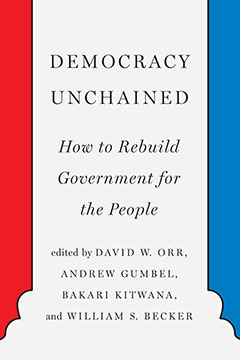
"Plato  thought democracy a preface to tyranny. Aristotle was not much more sanguine. The founders of our republic were wary of it. John Adams always believed that democracies always end in suicide. James Madison believed that with luck democracy in America might last a century. Alex deTocqueville thought it would evolve into majority tyranny. English writer E.M. Forster could give it two cheers. H.L. Menken none at all, believing people incorrigibly stupid. Economist Joseph Schumpeter likewise thought voters became dumber when they entered the political arena. Robert Dahl, perhaps the greatest student of democracy in the twentieth century, described himself as a "pessimist" about its future. Winston Churchill captured our predicament in his oft quoted observation that democracy was the worst form of government except for all the others ever tried. In short, democracy is always a bet that enough people will know enough, care enough,be tolerant enough, and informed enough to participate competently in the conduct of the public business. The United States, a representative democracy is not exempt fro the terms of the wager".  (David W. Orr) in Democracy Unchained: How to Rebuild Government for the People (2020, The New Press).

Democracy Unchained


This title is 400 pages of collected essays that emerged from a conference on the topic  that David Orr hosted at Oberlin in November 2017. Orr's introduction alone is worth the price of the book he and his three associate editors pulled together. But they have collected the thoughts of 38 distinguished scholars and leaders that I look forward to devouring soon.

In the other newest addition to the pile, Call Them by Their True Names: American Crises (and Essays) (2018 Haymarket Press), Rebecca Solnit in her forward notes, 

" Precision, accuracy, and clarity matter, as gestures of respect to those to whom you speak; toward the subject, whether it's an individual or the earth itself; toward the historical record. It's also a kind of self-respect; there are many old cultures in which you are, as the saying does, as good as your word. Our Word Is Our Weapon was the title of the compilation of Zapatista  Subcomandante Marcos' writings. If your word is unreliable, junk, lies, disposable pitches, you're nothing -- a boy who cried wolf, a windbag, a cheat." 


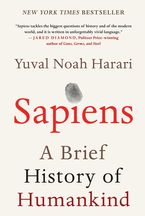
They join the pile of the almost completed Sapiens: A Brief History of Humankind by Yuval Noah Harari (2015, Harper) and Ways to Go Beyond and Why They Work: Seven Spiritual Practices for a Scientific Age, by Rupert Sheldrake (2019, Monkfish Book Publishing Co.). Also in the pile are the half-way read Trading for Good: How Global Trade Can Be Made to Serve People not Money by Christian Felber (2019, Zed Books) and Michael Nagler's, The Third Harmony: Nonviolence and the New Story of Human Nature (2020, Berrett-Koehler).

It's hard to say what they all have in common other that resting in the same space adjacent to my favorite reading spot. Certainly they each have called to me to the point of sharing considerable time in their company of ideas. Harari's work is a work that is truly of mind boggling scope. His writing style is quite airy making his vast leaps to connect elements like flying in open air plane. While I don't concur with all the connections he makes in this erudite effort, he perks up the readers attention to connections not usually considered. Everyone I know who has read it has been duly impressed. The scope is rarely something most of us would ever contemplate. That exercise alone makes the read worthwhile.

Sapiens


Rupert Sheldrake is a British biologist, author of more than ninety technical papers and fourteen books.  He has been driven to seek understanding regarding the connections between science and deep consciousness and/or spirituality. In this tome he looks at these connections through seven practices he associates with spirituality - "Spiritual Side of Sports"; "Learning from Animals"; "Fasting"; "Cannabis, Psychedelics, and Spiritual Openings"; "Powers of Prayer";  "Holy Days and Festivals"; and "Cultivating Good Habits, Avoiding Bad Habits, and Being Kind". In each of these he examines what the history and science tell while offering tips on how one might integrate aspects of each into our daily lives regardless of any faith tradition.

Book cover for Ways to Go Beyond and Why They Work

Michael Nagler has been one of the leaders in nonviolence education for many decades. We were fortunate to host him once at MSU a couple of decades back. For someone like myself who has read and studied nonviolence, there isn't much new yet to me, but it really reaffirms its practical benefits and possibilities. [Remember I'm only half-way through so I expect more to come]. Given the activism of Black Lives Matter and Sunrise Movement in recent days and months this work is timely in what it can teach all of us wanting to see change in our world.


I've written about Christian Felber a number of times, whose book Change Everything was one of the very best economics book I've read in recent years. Felber sets his sights in this book on how to create a system of trade that would make the achievement of the 2030 Sustainable Development Goals more likely. You don't have to be a number cruncher to enjoy and appreciate this look at the dismal science. Like he did in his earlier work, Felber critiques the dominant global trade policies, but then spends an equal time, if not more [I'm only a little past half-way point] outlining innovative policy options. These are the kinds of ideas we need to get to our policy makers in Washington.

Trading for Good

Exposure to the ideas in these collected pages will no doubt shift how I think, and possibly act in ways I can't even imagine. In my more facile moments I might be better able to paint how the ideas in these books interact and nudge us towards some more just, secure, and happy future. That ground doesn't feel very fertile at the moment, but who knows if in the remaining pages, especially of the newly arrived titles, some spark of fresh possibility might appear.

One possibly overlooked connection between these works besides their proximity to my reading space is the publishers. 

"The New Press is a nonprofit public interest publisher. New Press books and authors play a crucial role in sparking conversations about the key political and social issues of our day."

"Haymarket Books is a nonprofit, progressive book  distributor and publisher, a project of the Center  for Economic Research and Social Change. We believe that activists need to take ideas, history, and politics into the many struggles for social justice today."

"Berrett-Koehler is an independent publisher dedicated to an ambitious mission: connecting people and ideas to create a world that works for all. It is the first book publishing company to be both a B corporation(a rigorous certification) and a benefit corporation, which together require us to adhere to highest standards for corporate, social, and environmental performance."

"Zed Books is a platform for marginalized voices across the globe. It is the world's largest publishing collective and world leading example of alternative, non-hierarchical practice."