Showing posts with label wealth. Show all posts

Monday, December 9, 2024

Winners Take Everything

 I really should read some definitive works on what we know about the "Bread and Circuses" period of the Roman Empire. According to Wikipedia, 

"It is attributed to Juvenal (Satires, Satire X), a Roman poet active in the late first and early second century AD, and is used commonly in cultural, particularly political, contexts. In a political context, the phrase means to generate public approval, not by excellence in public service or public policy, but by diversion, distraction, or by satisfying the most immediate or base requirements of a populace,[1] by offering a palliative: for example food (bread) or entertainment (circuses). Juvenal originally used it to decry the "selfishness" of common people and their neglect of wider concerns.[2][3][4] The phrase implies a population's erosion or ignorance of civic duty as a priority.https://en.wikipedia.org/wiki/Bread_and_circuses"  

On fall Saturdays and Sundays in contemporary America, the major circus is American football - either or both NCAA games or NFL ones. But change the calendar a bit and it could be baseball, basketball, or ice hockey. Team sports are particularly the biggest attention grabbers. And yes, I understand the desire to distract ourselves from the mundane or spiritless elements of contemporary lives by being spectators of team sports. As a youth I was hooked on following team sports and playing a few in my neighborhood and schools. Even today at 75 I've been playing competitive softball. So I'm not against team sports as a fun and potentially positive force on us as individuals.

But there are some larger issues of growing concern that are rarely discussed or considered. This is the focus of this brief post. 25 years ago, since I felt there were legitimate concerns that were not being considered or discussed, I wrote in a professional library journal about "Beneath the Surface: The Unintended Consequences of Information Technology". In that context my concerns were with the following:

  • Speed
  • Info glut
  • Cultural amplification
  • Alienation and demise of community
  • Status

With our mesmerization with team sports my concerns are: 

  • Increasing commercialization of sports
  • Demonization of opponents
  • Sole focus on winning
  • Solidification of competition as the dominant human driver
  • Incredible sums given to some individuals
  • How all of these are in conflict with the our role as a species in the community of life

I happened on a college football game yesterday and saw the violence inflicted on the human body and of course a recent death of a college football player from the affects of a game. There is a celebration of war in the air, where vanquishing the enemy at any cost is an elixir inhaled by players and fans alike. We line up and call our fellow competitors, foes. The frenzy of the mostly white fans, especially the young males, is palpable. Since the cost of tickets is ridiculously high, only middle and upper classes can afford to attend. The enormous sums now going to certain individual athletes, not to mention team owners, is absurd and a driving factor for the increase in ticket prices. Just tune into any of the professional leagues on broadcast tv and note the absence of people of color in the stands as opposed to the participants in the game.

The bleeding of this ethos, that winning is everything, has seeped into the politics of our time. The new administration coming to Washington in a matter of weeks is loaded with the economic winners worth more than $340 BILLION. That's not million, it's BILLIONS or 340,000 millions. The wealth of billionaires already a staggering amount a decade ago has more than doubled since then. This is the outcome you get when you follow the mantra that winning is everything. 

Of course the other side of the coin are the losers. All the rest of us are losers, especially the young and yet to be born who will have to cope with a wounded planet no longer the relatively stable one for human life it has been since we became an upright species.  Given that the rich are responsible for burning grossly more fossil fuels, that destabilizes the climate and ecology that provides us life support, it just adds more proof to the failures of winning is everything.

Now that the winners have purchased control of government here and are preparing to lock-in that control while increasing their personal winnings, the road back to sanity that nurtures and  supports an ethos of cooperation, compassion, and conservation must be our response. Let me leave just one example of what committed cooperative efforts can inspire. 

 Ridwell is a waste reduction business now operating in seven major metropolitan areas - Seattle, Portland, Denver, Atlanta, Austin, Los Angeles, Bay area,and Minneapolis-St. Paul. It is now a certified B Corporation but it started out as a neighborhood effort in Seattle

 

"It all started with a son, a dad, and a bag of batteries…

Ryan knew that batteries had chemicals in them so began researching where in Seattle to dispose of them. This was not an easy task. Locations start and stop accepting batteries and it wasn’t until Ryan’s third call that he found a safe destination.

Thinking that neighbors might also have dead batteries, Ryan decided to see if he could take others along the way: a recycling carpool.

Owen was thrilled. He and Ryan started scrounging around their house for other things they could recycle: light bulbs, electronics, clothes hangers, Styrofoam, plastic bags, clothing, and even Halloween candy!

Each time, Ryan and Owen would tell their neighbors so they could also save their stuff from landfills. Pickups got bigger and bigger and eventually word spread beyond Ryan and Owen’s neighborhood.

Soon, the demand was too high to be handled by just a dad and his six year old. Aliya, Justin, and David jumped in to help with pickups, donations, and spreading the word around town.

Still, demand continued to grow and we decided that there just might be enough people who shared our vision of the future. And so we founded Ridwell, a solution you can always count on to get rid of things the right way."

This is the type of win-win-we-all-win approach that is needed.
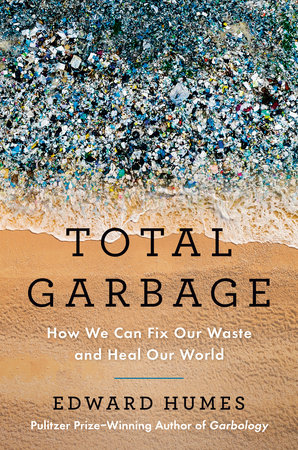
 Total Garbage by Edward Humes

You can read more about this and other efforts in the Pultizer Prize winning author Edward Hume's new book, Total Garbage: How We Can Fix Our Waste and Heal Our World.

Just in the past 24 hours I've learned about  two distinctive approaches to building a sustainable future that seem worth delving into. In both tone and depth they appear to be particularly useful for our time. The invoke the spirit of cooperation. Maybe one or both of them will fuel something useful to you.

Rock Creek Institute https://rockcreekinstitute.org/

Berggreun Institute  https://berggruen.org/


Wednesday, December 27, 2017

You Can Bank On It

It is pretty difficult to make a non-partisan argument around the recent tax code changes adopted by the Republican Party which owns the government from top to bottom. For it is entirely a partisan idea and decision. Not that the Democratic Party has been the beacon of progressive tax reform.

34962042

Ron Formisano, a professor emeritus of history at the University of Kentucky indicts the entire 'political class' with our current dilemma. In his new, but seldom read book, American Oligarchy: The Permanent Political Class (University of Illinois Press, 2017), he unleashes the muckraking style of the last era of robber barons by famed journalists Ida Tarbell, Upton Sinclair, Lincoln Steffens, C. Wright Mills, etc. Through 210 pages of lucid prose supported by another 60 pages of detailed footnotes, Formisano lays bare the corruption endemic to the political class and how its capture of our American Society has established a fully formed oligarchy. For more on the 'capture'  component see also Sen. Sheldon Whitehouse's Captured I reviewed earlier this year.

Formisano doesn't just pick on the elected officials and the jurists but the corporate heads, higher education administrators, and even the heads of nonprofits. Of course the grease in the system is money and wealth. The increasing gap between the bottom and top has been expedited by the political class which has no real ongoing connection to the middle and lower classes. Even more telling for Formisano is the capture of the economy by the financial sector. This is a growing concern even for conservative institutions like the International Monetary Forum which noted in a recent report cited by Forisamo that "excessive financialization of the U.S. economy reduces GDP growth by 2% every year...a massive drag in the economy -- some $320 billion per year." (p.194)

And the gap between the rich and the rest of us grows as well as Bloomberg reported today "World's Wealthiest Became $1 Trillion Richer in 2017"


Page after page demonstrates how even persons entering government or nonprofits with good public intentions get absorbed into the political class. The sharing of board members, the lobbyist favors, inside relational contracting, shared vacations and junkets all corrupt any pretension of democratic principle. He notes that while both Trump and Sanders spoke to the idea of corruption of power,  Trump of course has blatantly turned over the executive branch to these same members of the oligarchy. While the book does read in the style of Tarbell, Steffens, Mills, Sinclair, and more recently recently deceased political scientist Chalmers Johnson, he does not offer us any roads out of this mess.


One direction from a recent book, which likewise probably has equally few readers, is offered by K. Sabeel Rahman. In his recent Democracy Against Domination, Rahman, a former Rhodes Scholar who studied economics, political theory and law at Harvard and Oxford  teaches law at Brooklyn Law School. Rahman's style is more turgid and aimed primarily  at other academics I suspect but his argument is fresh and worth pondering.

"This progressive economic vision suggests a radically different approach to financial regulation.  The book argues that our prevailing approach to TBTF [too big to fail] finance relies too heavily on a faith in insulated, neutral, top-down regulation by experts, despite the risks of industry lobbying or the complexities of trying to manage the modern financial system.  Instead, the book suggests that a better approach would place stricter, structural limits on TBTF financial firms, whether by “breaking up the banks” or by regulating finance as a kind of public utility.  Drawing on the latest thinking in economics and law, the book suggests how we need to revamp our financial stability regime."

He sees the failure of leaving the regulating the economy and the corporate sector to 'experts', for which I assume he would include himself, and calls for a much deeper and vibrant model of democracy. I believe his argument on this particular failure is well done - this attack on the "let the experts rule". He shows the underbelly of this flawed approach, but not as poignantly as Sen. Whitehouse did in his book. But his reasoned call for a deeper democracy to address the domination of the 'political class' as Forisamo names it is stronger than what  either Whitehouse or Forisamo offers.


Still I failed to see a systemic plan of specific options to address the flaws. Here's where I would point to the Austrian Economist Christian Felber's remedies he laid out in his 2016 Change Everything: Creating an Economy for the Common Good that I shared in 2016. While the piling  evidence makes crystal clear to anyone wanting to look at it that our economic system as run by the' 'plutocracy' Formisano shines his piercing light on is cascading us towards a twin abyss of increasing inequality and climate destabilization.

Sunrise Movement

While the path out of this is a bit murky, the recent tax law disaster is going 180 degrees in the wrong direction. One promising approach before us in 2018 is following the lead of the youth led Sunrise Movement. One of their suggested strategies is to approach candidates for office at all levels and ask them to pledge not to accept money from the oil, gas, and coal lobbies. I would add the financial industry.

It is our youth who will have to lead us out of this mess as they are the ones that will be forced to live with the worst of what we have sown.

Thursday, March 23, 2017

The Rush to Avoid Taxes

We now have less than 30 days to finish up our federal tax forms and get them to the IRS and state capitols. As I noted recently in this blog, "taxes are dues for living in a civilized society". So why do we all seek every advantage to reduce those taxes? We want deductions for our home (interest on mortgage, property taxes, etc.), for our charitable contributions, for state and local taxes paid, the list goes on.

There is an entire industry focused on how not to pay taxes - accountants, tax lawyers, tax preparation firms, all promising big savings if you know where to look and how to manage your affairs to minimize the dues we supposedly pay for a civilized community. Can we deduct our travel expenses for volunteer work, how about the tax credit for our solar installation, or the new energy efficiency changes made to the home?

Of course these are relatively small deductions that save many in the middle class a few hundred, or maybe even a couple thousand dollars in taxes per year. How can we actually minimize our overall tax rate we have to pay? Simple - by managing our funds so that more of our income arrives through capital gains than real work. Not surprisingly capital gains are almost entirely in the hands of the wealthiest. The wealthiest 1% make more than a third of their income from capital gains. The  New York Times reported that "estimates show that nearly 70 percent of all capital gains benefits go to the top 1 percent." 

While the plutocrats and their neighbors cash in at lower income tax rates than middle class citizens with larger deductions and the lower capital gains rate, it seems like nearly everyone is hooked on the notion that paying taxes is something you must avoid. And if you are wealthy enough, you can afford the services of the aforementioned tax consultants to help you do so.


Of course the corporate world, also run by the wealthiest among us, takes tax avoidance to a whole new level, whether it's from hiding income in offshore tax havens, or having their hired lobbyists create a specific tax loophole for them, in exchange of course for a nice little contribution to the legislators that are willing to fill their pockets. Oh yes, again let's not forget how they use their accumulations to take advantage of that low capital gains tax rate.


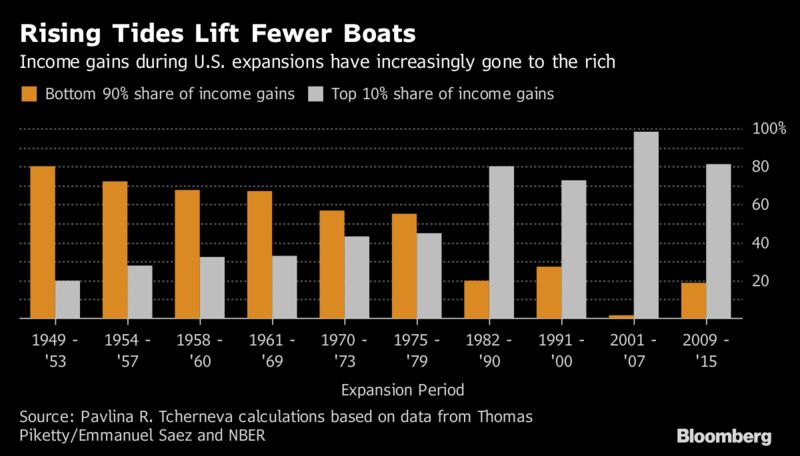
While I'll admit I don't own a PhD. in economics, looking at changes in the tax rates since World War II shows a striking parallel shift in income inequality. Every time we make yet another reduction in the taxes for the wealthiest, we increase the inequality. The trickle down "voodoo economics" plan boosted by Ronald Reagan never really trickled down. Surprise!!!


Mr. Trump's recent budget proposal accomplishes this not simply by cutting rates directly, which he is certainly aiming to do, but as a recent analysis, reported by the New York Times last week  of the TrumpCare proposal indicates, that $1 Trillion in tax cuts embedded in it will over a decade will find their way into the pockets of the richest Americans.

The House Republican Tax plan as reviewed by the Center for Budget and Policy Priorities shows visually how the tax code may be further loaded to the wealthiest.


So the reduction in progressive taxation that gained steam with Ronald Reagan's "Voodoo Economics" continues.  Or does it actually get worse? If one looks at the holes collectively engineered into the social safety net by the Trump budget proposal,  we can see more and more people falling through it. But in Speaker Ryan's world, "it's their choice". 

If we are to live in a civilized society, that doesn't let our brothers and sisters fall through our porous safety net, we need to all consider paying taxes as our dues. Making that system fairer, i.e., more progressive, is essential to that end. The security of each of us is entangled with the security of all of us. 

One planet, one human family, one common future.

Tuesday, July 15, 2014

On the Cheap

Michael Carolan's Cheaponomics: The High Cost of Low Prices shines some desperately needed sunlight on the current neoliberal hegemony over our economic system. Carolan, who writes with aplomb supported by a lengthy recitation of research unmasks the hidden costs of 21st century capitalism.


.
cheaponomics Carolan unmasks what he frequently refers to as socialism of the costs, whereby the costs of production are socialized while the profits are privatized.

     I have long been struck by how the term "socialist" has been used, particularly in the United States. As far as I can tell, it refers exclusively to someone who promotes redistributive policies that seek to spread the wealth. Under this scenario, the benefits generated by the an economy are spread - are socialized - to various degrees across society. Yet benefits are not the only things that can be socialized. Costs can too. While quick to brand their intellectual adversaries as socialists, proponents of the economic status quo have yet to catch on to the fact that they are also deserving of the "socialist" title. They strive to make society pay for the costs of this economic system while concentrating the benefits with the hands of the few.  They are socialists too, though the type they promote I would argue is far more insidious, unjust, and unsustainable than that advocated by their antagonists.  This brings me to the book's title: Cheaponomics - shorthand for cost-socializing socialism. (p.3)

Carolan through successive chapters paints a clear picture of how the cheapness of food, free plastic bags, automobiles and the overall trends towards retail concentration, low prices, long hours have huge costs for society and the environment that we all pay. While not optimistic, he does close with ten recommendations for the good, affordable and affording. Like all good economists he highlights among many things the need for increasing transparency and and enhancing our democracy.

These are basic elements that all societies can benefit from that have positive ripple effects across the economy, the social fabric, and the environment. It highlights the hypocrisy of those who decry attempts to get labels of origin on their food and other products or whether or not the ingredients are organic, or GMO free, or the chemicals used in fracking, or whether they come from the other side of the planet produced by slave labor. For markets to function well at all, there must be full information for the consumer to make intelligent choices (a principle for which Joseph Stiglitz was rewarded with a Nobel award).

I would extend  transparency to include how profits are used or shared with stakeholders, which would let us know if firm X was compensating its employees well or poorly; giving to the community for public purposes; or lobbying for their private benefit. Until we take the full range of social and environmental costs into account, the market will continue to redistribute wealth to private gain with little concern for the public good. Call it what you will, but the data Carolan shares shows us the costs are real and are mounting.

We can quibble with his recommendations, but we do need to confront the reality he lays bare before us. 


Friday, April 11, 2014

The Great Unraveling and an Antidote

(CNN) -- When Congressman Paul Ryan opined recently that there was a "real culture problem" in poor communities, "in our inner cities in particular," and that this culture was behind some of the country's economic troubles, he didn't realize how half right he was.

People are continuing to debate fiercely what Ryan said and whether he meant to propagate racially coded explanations of poverty's roots. But put that aside for a moment. Here's what he was right about: There is indeed a culture in America that is pathological and now threatens our social fabric. It's not the culture of poverty, though. It's the culture of wealth.

 Citizen University

So begins Eric Liu's opinion piece "How America is Rigged for the Rich" this week on CNN. Liu is the founder of Citizen University and author of several books, including Gardens of Democracy. In this short piece Liu goes on to say,
   
             When the richest 400 families in America have more wealth than the bottom 155 million        Americans combined, the danger to the republic is far more clear and present than that posed by the "welfare queens" of lore or by anecdotes of shiftless inner-city men.

In another article that found its way into my line of vision this week, Evolution Institute Vice President  and professor of biology and anthropology, Peter Turchin, shares his analysis of forces at work in earlier societies unraveling.

 Home

 He cites some examples that turned earlier marches to the cliff around.

            In some cases, however, societies come through relatively unscathed, by adopting a series of judicious reforms, initiated by elites who understand that we are all in this boat together. This is precisely what happened in the U.S. in the early 20th century. Several legislative initiatives, which created the framework for cooperative relations among labor, employers and the government, were introduced during the Progressive Era and cemented in the New Deal. 

          By introducing the Great Compression, these policies benefited society as a whole. They enabled it to overcome the challenges of the Great Depression, World War II and the Cold War, and to achieve the postwar prosperity. Whether we can follow such a trajectory again is largely up to our political and economic leaders. It will depend on all of us, rich and poor alike, recognizing the real dangers and acting to address them.


While I found each of these pieces informative and thoughtful, the underlying frame offered in Mohammed Mesbahi's "Commercialization: The Antithesis of Sharing" is the more radical, both in the sense of getting at the "roots" and in what it has us ask of  ourselves.


       The danger is not commercialization per se but our constant identification with its inner and outer manifestation, in which humanity’s intelligence is led in the opposite direction from nature and spiritual evolution. What is evil, anyway, if not our identification with it?

Mesbahi, who founded Share the World's Resources, goes on to elaborate. 


Home
    
         We all understand what sharing means on a personal level, as everybody shares within their homes and communities. So why do so few people understand the need to implement the principle of sharing on a national and worldwide level? A large part of the answer to this question can be simply put: it is because the foundations of our society have been constructed in such a way that market forces have become loose. We have developed complex economic and political systems that are increasingly geared towards profit and commercialization: the tax structures, the large corporations, the countless legal regulations that are created to defend private interests - all of this creates a highly complicated and divisive society. Nobody understands the system in the end, but the system understands precisely how to manipulate us for its own purposes. And in such a complex society, with so many laws and policies created to facilitate commercialization, the principle of sharing is almost non-existent.

          As long as we live in a society that is driven by profit and commercialization, the principle of sharing will always be eclipsed. In every sphere of human activity it can be observed that when commercialization moves in, sharing moves out. The same reality also pertains to the environment: when commercialization moves in, nature moves out. Indeed when commercialization moves in it can be so invasive, so destructive, that it can break apart families. It can break apart traditions and national identities, as we have seen with many free trade agreements and the economic integration of Europe. Wherever these forces are unleashed it can lead to a widening gulf between rich and poor, a loss of community solidarity and a contagion of spiritual turmoil, and a diversion of man’s God-given intelligence in the opposite direction of social progress and evolution. And if commercialization is left to blindly guide a society for a long enough period of time, it can even compromise human life.


The signs are everywhere that we are unraveling not only the life-support systems we depend on, but the social fabric that might hold us together - the IPCC report from last week just being one recent piece of evidence. The increasing concentration of wealth and power just being another. And as  one can deduce from reading the pieces cited above they are fundamentally because our social myopia has us believe that we are free and independent from each other and the planet that sustains us. The boundaries of difference that we erect - political, class, ethnicity, religion are mere fictions. When we can both understand that reality and act in accordance with it, embracing Meshabi's call for sharing, maybe we can forestall the unraveling and enjoy our connectedness with nature and all those we are in kinship with.