Tuesday, September 30, 2014

Climate, Prosperity, Economic Growth, and Governance

     "It must always be remembered that the greatest barrier to humanity rising to meet the climate crisis is not that its too late or that we don't know what to do. There is just enough time, and we are swamped with green tech and green plans. And yet the reason so many of us are greeting this threat with grim resignation is that our political class appears wholly incapable of seizing those tools  and implementing those plans> And it's not just the people we vote into office and then complain about  - it's us. For most of us living in post-industrial societies, when we see the crackling black and white footage of general strikes in the 1930s, victory gardens in the 40s, and Freedom Rides in the 60s, we simply cannot imagine being part of any mobilization of that depth and scale. That kind of thing was fine form them, but surely not us - with our eyes glued to our smartphones, our attention spans scattered by click bait, our loyalties split by the burdens of debt and the insecurities of contract work. Where would we organize? Who would we trust enough to lead us? Who, moreover, is "we"?

     In other words, we are products of our age and of a dominant ideological project - one that has too often taught us to see ourselves as little more than singular gratification - seeking units to maximize our narrow advantage. This project has also led our governments to stand by helplessly for more than two decades as the climate crisis morphed from a "grandchildren" problem to a banging-down-the-door problem." Naomi Klein, in The Nation, October 6, 2014

British economist, Tim Jackson writes in last week's Guardian about the conflict between economic growth and climate change. In The Dilemma of Growth: Prosperity vs. Economic Expansion, Jackson asks:


"Rethinking prosperity is a vital task because our prevailing vision of the good life – and the economics intended to deliver it – have both come badly unstuck. Financial markets are unstable; inequality is rising; and despite the 500,000 or so people who took to the streets before Tuesday’s UN Climate Summit in New York, tackling climate change still faces a “frustrating lack of progress”. If this were not enough, the proposition that more is always better has signally failed to deliver, particularly in the affluent west. But questioning these values is deemed to be the act of lunatics, idealists and revolutionaries."

Add me to that list.

But wait, there are signs of hope. From author Terry Tempest Williams blogging at the NYC Climate March, just a week ago -
    
     "They just kept coming in waves, in torrents, a river of people convening on the streets of New York City in the march for climate justice. They just kept coming, hundreds of thousands of individuals, indigenous, black, white, brown, yellow, and red, a rainbow of colors winding through the canyons of Manhattan.
     This movement of climate justice is no longer segregated, is no longer privileged, is no longer young or old, or the radical fringe moving toward the center. Instead, this movement resides in the core of a collective concern: Earth has a fever. There is no Planet B. What we witnessed on Sunday, September 21, was 400,000 individuals standing in the center of this crisis with love."

Maybe, there is just enough hope, that readers will throw off the shackles of hopelessness and take up the hard and long work of redirecting our future.

An election is only five weeks away. It's not too late or too early to work for a candidate or proposal in your community that can point us in a new direction. Not sure who? LOOK HERE

 Vote411.org

Now, not tomorrow.

Tuesday, September 23, 2014

Dangerous Love

 The Sun

The newest (October 2014) issue of The Sun arrived late last week in my mailbox (October issue is not available online as of the time I write this. As of this morning I've read most all of it. Since resubscribing after many years of absence I have found it to be 'soul building' food. The writing, the topics, the diversity all filled with writers sharing their soul. Even the short pieces of the monthly "The Readers Write" section are uniformly moving, thoughtful. It says a lot about the editor, Sy Safransky, who has been publishing this little magazine, AD-FREE, for decades.

There is a lengthy interview in this issues with someone I had never heard of before, Reverend Lynice Pinkard under the title of "Dangerous Love". The interviewer, Mark Leviton introduces the interview -

 "I first encountered the work of Reverend Lynice Pinkard when I read her essay "Revolutionary Suicide" in the magazine Tikkun. Her writing combined fervor and thoroughness with a big heart. Although she is a Christian - she grew up in the African American Church - her analysis of the Hebrew prophets resonated with my Jewish background. When I contacted Pinkard about the possibility of interviewing her for The Sun, she suggested I first listen to some recordings of her sermons, archived on the website of First Congregational Church of Oakland  where she served for eight years as a pastor. I did and was impressed by the passion of her presentation and the rigor of her arguments as she exhorted her congregation to switch from a  typical American life of consumerism to one of giving without expectation of reward."

I have not read the essay Leviton mentions in Tikkun although the link to it above is there and I will read it soon. His interview with Pinkard is compelling and challenging especially for this agnostic, but I feel like I'm a better person for having read it. Below are just two short excerpts that fail to give a full flavor of the interview, but on their own are worthy of sharing with readers of this blog.

"I also believe that what we have loved in our short lives constitutes our legacy, and that we become who we are, with all our flaws and faults, because somebody somewhere loved us and cared for us and sacrificed for us. I have loved some people, and some people have loved me, and that has saved my life." (p.17)

"It is our job to collaborate with each other and activate that love." (p.16)


Monday, September 8, 2014

The Politics of Peace

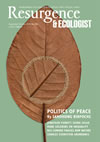
      "Satish Kumar’s title – Soil, Soul, Society – could hardly be more sparse; yet it represents, he says, a “distillation” of his own lifetime’s thinking and that of his heroes – and the three small words are all we really need to put the world to rights. For our aim should be – should it not? – to create harmony in the world; and this must be achieved at three levels. As individuals and as a species we need to move away from our anthropocentricity – for “humans have come to believe that they are separate from Nature and above Nature” – and to see ourselves once more as part of Nature; and this is the notion symbolised by ‘soil’.

       For this as for all else, we need harmony within ourselves, practising humility and seeking to abandon ego: the idea encapsulated as ‘soul’. Of course, too, we need to seek harmony with the rest of humanity – ‘society’ – and indeed to treat all creatures with the same compassion. 

        All this should be second nature, yet it is the diametric opposite of the worldview that came out of the West and now dominates the whole world: entirely anthropocentric; entirely materialistic; crudely ‘rational’ in a calculating kind of way; employing science to control and even ‘conquer’ Nature; and locking us all into no-holds-barred competition, which in essence and commonly in practice has no truck with compassion at all.

So begins the review of Satish Kumar's recent book by Colin Tudge in the recent issue of Resurgence.
issue cover 286 The issue includes many gems including pieces by Charles Eisenstein and Samdhong Ripoche. The topic of the issue that arrived in my mailbox over the weekend, "The Politics of Peace", has been coursing through my veins more intensely of late, perhaps because of the events in Gaza, Ferguson, Missouri, Ukraine, Syria, Iraq and my own involvement with our Peace Education Center.

More likely it's tied to the just completing a short book by Barry Gan, Violence and Nonviolence: An Introduction. In it, Gan, a professor of philosophy and director of the Center for Nonviolence at St. Bonaventure University, succinctly lays out five myths of violence:
  • Myth of Physical Violence
  • Myth of Good Guys and Bad Guys
  • Myth of Necessary Violence
  • Myth of Effective Punishment
  • Myth  of Nonviolence as Ineffective
 Front Cover

Gan sets up this critique of myths of violence with a short story about looking for a missing wallet. After searching endlessly in all the wrong places, they eventually retrace the actions that preceded loss of the wallet.

     "The point is that when we look for something we have lost, we first decide where we might have displaced it, and then begin to search. However, if we are wrong in our assumptions about where we lost it, we fail to find it. Our likelihood of success is determined by our initial assumptions. This observation illustrates the central and noncontroversial point of the first part of this book: that our assumptions govern or direct our individual behaviors, and the assumptions of a community or society govern or direct its social, political and economic behaviors and policies." (p.3)

In the 111 pages that follow, Gan not only addresses each of the five myths (false assumptions) he gives us a concise, jargon-free review of the alternative. Yes Margaret Thatcher, There Is an Alternative!!

Like Satish Kumar's new book listed above, Gan concludes that peace/nonviolence must come from the inside out. There is a fearlessness in this approach that is hard to come by for most of us.

I find it hard to fathom that so little of the curriculum in our schooling from K-12 through PhD really gives much attention to these assumptions about violence or the POSSIBILITY that there might be a better way. As I have written before we spend billions to prepare for war and almost nothing to understand and nurture peace. More money funds university research on weapons than on approaches to resolving conflict. Where we spend our money shows what we believe in.

After reading, Gans, Ripoche, Eisenstein, and  Kumar, and listening to this Tom Paxton classic song over the weekend for the first time in years, I think they have it right! This must come from the inside out. How does our educational system foster that kind of personal development? It's currently all about job and career. So until we fix that, we'll keep churning out 'educated' people who believe that violence is a given and we need to protect ourselves from others - humans, animals, nature. Ah, the myth of independence strikes again.

Now how to live fearlessly, committed to a world without violence, therein lies the rub. One thought at a time. Here's to you dear reader - may you have the strength of your nonviolent convictions!

Peace
Peace will
Peace will come
And let it begin with me

We
We need
We need peace
And let it begin with me

Oh, my own life is all I can hope to control.
Oh, let my life be lived for the good,
Good of my soul.

Let it bring
Peace
Sweet peace
Peace will come
And let it begin with me

Thursday, August 21, 2014

Citizenship, Higher Education and Inequality


"If educators are agreed on anything, it is that the fundamental purpose of education is to prepare young people to be good citizens."


These words from John Hannah are etched on his statue that stands in front of the MSU Administration Building, that bears his name.
 
Hannah was the longest serving president of MSU serving in that capacity from 1941-1969. He saw it move from a respectable Midwest college to a major research university.  He also served as the first chairman of the U.S. Commission on Civil Rights, and later head of the US Agency for International Development.

I traced down the origin of that speech in his collected papers preserved in the University Archives and Historical Collections. From what I saw, the quote is indeed accurate, having been given at a National Conference on General Education in 1961. The speech was reprinted in the May 1962 University College Quarterly, under the title "Responsibilities in International Education". In examining the context of these etched words, we see a proponent for international education making the case for what he calls "six categories of responsibility in international education", the sixth category being the one etched on his statue and cited above which he also mentions later as "the responsibility for the preparation of American students to play their roles in the years ahead."

The sentences following the quote we began this blog with are equally insightful.

     "Adequate preparation for citizenship means learning many things. It means learning, among others, how to be a productive member of society economically. It means learning how to find one's proper place in society in agreeable relationship with others. It means learning how the political system works. It means learning enough of the world and of the universe to lend a proper perspective to the judgments a citizen must make."

Hannah goes on and finishes with the following affirmation of this central point of his address:

     "There are many ways to raise the level of understanding of the American people of the world situation, and develop their capacity to make the wise decisions required of them. Most of these methods are in the hands of our educational institutions. This is as it should be, for formal education has been assigned the primary role of preparing young people for effective citizenship.
      We may train selected specialists for specific assignments over seas. We may embark on worthy projects of many kinds in distant lands to improve the lot of underprivileged people. We may continue to welcome foreign students to our campus. We may do all of the other things we have considered.
      But none of them bears as directly upon the central interest of the American people as does the responsibility of preparing young Americans through higher education to be effective citizens in a troubled and rapidly shrinking world. To be an effective citizen in today's world makes extraordinary demands upon educated individuals. Fitting our students for this role is a primary responsibility of United States universities."

Earlier that year, Hannah gave another talk that I came across in his papers entitled "The Challenges of Equal Opportunity to the Colleges and Universities" at a Washington, D.C. Conference on Equality of Opportunity in Higher Education. Here Hannah lays out another responsibility of higher education, especially of land-grant universities.

     "All persons become more valuable by education, more useful to themselves and to the community.
      It is abundantly clear, then, that the land-grant colleges were established to correct an existing inequality in educational opportunity. That inequality was first expressed in terms of vocations and professions --[Jonathan Baldwin] Turner and others pointed out that agricultural and mechanical workers were not getting a fair shake when compared to the professions. This, they said, was unfair -- the American people, with their love of fair play and sympathy for the underdog, gave overwhelming approval to their proposals."

More than fifty years have passed since Hannah spoke these words and the data clearly shows we have more inequality. How higher education and institutions like Michigan State University, the original land-grant institution, address these issues is crucial for our collective future and the public good.

Sunday, August 17, 2014

Higher Education and Rising Inequality

In an intriguing article last month on Huffington Post, Harry Boyte, director of the Center for Democracy and Citizenship at Augsburg College and a Senior Fellow at the University of Minnesota's Humphrey School of Public Affairs,

 
talks about how the norms of higher education have shifted. In noting a recent report Unseen Disadvantage, Boyte offers that higher education today "embodies individualistic, hypercompetitive achievement norms which contribute to inequality in a number of ways."

In my own recent discussions with colleagues from various institutions of higher education, the refrains echo this claim. Boyte, editor of a forthcoming book from Vanderbilt University press, Democracy's Education: Public Work, Citizenship, and the Future of Colleges and Universities, has been a leader in examining the relationship between education and citizenship and the shortcomings, especially in higher education. Boyte hasn't just feverishly studied the role and impact of higher education on community development, he has been a leading innovator of attempts to shift approaches used to connect students to their role as citizens while enhancing their citizenship skills.

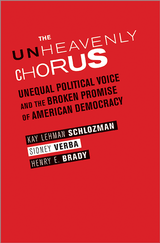
The emphasis here on inequality is important. It reminded me of the important research published in 2012 by three leading political scientists, Kay Lehman Schlozman, Sidney Verba, and Henry Brady in Unheavenly Chorus: Unequal Political Voice and the Broken Promise of American Democracy.

bookjacket
In this hefty, 693 page multiple award winning tome, Schlozman and colleagues review a huge number of studies and discern, what a reasonable person might easily infer, that the growing economic inequality parallels a growing political inequality.A review of this work by the Sunlight Foundation provides a nice synopsis along with some of the data and graphs from the book.

Boyte and others, including a forthcoming report this fall from professors Martine Gillens and Benjamin Page that as one reviewer of their study,  Professor Allan J. Lichtman notes,

      "The analysts found that when controlling for the power of economic elites and organized interest groups, the influence of ordinary Americans registers at a “non-significant, near-zero level.” The analysts further discovered that rich individuals and business-dominated interest groups dominate the policymaking process. The mass-based interest groups had minimal influence compared to the business-based interest groups."[

That so much of our culture, including most of those busy competing in the fields of higher education, are oblivious to this growing pile of evidence around the economic, social, and political devastation of inequality seems hard for this author to believe.

Thanks to Boyte on others trying to shine a bright light on a significant system failure. But when you have those who believe in the myths of neoliberalism making decisions, while ignoring the realities of those impacts, we can't expect much different outcomes.

Time to bring in fresh thinkers, like Boyte to help our leaders turn these ships around. Or if they are unwilling to do so, we need to choose new leadership for the ivy towers.


Monday, August 11, 2014

Fourth Estate Throwing a Shutout


Since the sports sections of our local papers often share as much, if not more, of the news hole of the daily paper as local or national news, I thought this post title was appropriate for what follows.

Elect Terry Link to Michigan State University Board of Trustees
Some of the handful of folks who might regularly look at this blog may know that I am a current candidate for the Board of Trustees at Michigan State University, an institution I recently retired from after nearly 30 years of walking its wonderful campus. MSU is among three state universities in Michigan (University of Michigan and Wayne State University being the others) for which our constitution requires the state electorate to choose the trustees. While I was last elected as a Democrat for a county commissioner seat, I chose to run this time as a candidate from the Green Party.

Why, you might ask, given the minute likelihood a Green Party candidate could win a statewide election? To be honest, my past experience with major party conventions is that the outcomes are largely predetermined. Those candidates nominated have dollars, connections with party leaders, and/or wide name recognition. What one stands for, what knowledge and experience one has with the issues and the system they will oversee, is not a serious consideration. The primary institutional relationship is usually limited to being an alumnus/a--a process not too different, I suspect, from how ambassadors to other nations are selected by
the White House, regardless of its resident at the time.

Pursuing a nomination in such an atmosphere would offer neither much chance of winning nor a real opportunity to raise all the issues around the position and the challenges facing higher education that I think ought to be raised. The other option was to pursue running as an independent.  While this might be a future pursuit, the effort needed to secure enough signatures from all congressional districts of the state would take a boat load of time, money and energy. I wasn't optimistic that this would work.

I was well aware of the Green Party having done research in the mid-1990s on how local Greens made decision rules and became enthralled with their dedication to fair process and giving every participant a voice. I was also aware of and support the global Green Movement's commitment to Ten KeyValues:

*       Ecological Wisdom
*       Nonviolence
*       Social Justice
*       Grassroots Democracy
*       Community-Based Economics
*       Diversity
*       Feminism
*       Decentralization
*       Personal and Global Responsibility
*       Future Focus

So I sought and won the nomination at the party's state convention earlier this summer.

Now the game plan for trying to win a statewide election as a minor party candidate is anyone's guess, since no one in this state has ever successfully done it to my knowledge. So, given all this, one of the approaches to help somewhere around 1.5 million voters choose to vote for Link this fall is to attempt to get a serious consideration from newspapers around the state that make endorsements for this race. As part of that effort I communicated with one daily paper late last week that bluntly told me they did not make a practice of interviewing minor party candidates. That's right, folks, a major daily newspaper in the state denies the existence and legitimacy of those candidates, legally named on our ballots, as deserving any consideration.

I wrote them back that as a former instructor in the school of journalism, I found this an abrogation of the responsibility our country's founders gave the press. So now we have the floods of anonymous money at one end, and the shut out from the news hole at the other. What are the voters supposed to do? Even neoliberal economists recognize that for markets to work well there must be full information available to buyer and seller. As I noted in the last blog, this happens in real life less and less often. But in a democracy, how can voters make good choices if some of the choices are not visible to them?
Photo: Terry says:

"Many thanks to the volunteers over the weekend helping me reach out to voters at THE GREAT LAKES FOLK FESTIVAL - Sarah Ann Mullkoff, Ellen Link, Melany Mack, Robert Mack, Mary Herr, Dan Dekker, and Sharon Monod. We spoke and handed out somewhat more than 1,000 pieces of literature, plus some of us were wearing the yard signs as we strolled the festival. 

Pass the word. we need between 1.4-1.5 million votes based upon the 2010 outcome!!!"

(Photo courtesy of Catherine Gibson.)
I'm not asking for an exception for myself. I want all minor party candidates to have EQUAL access to the voters and not to be dismissed by the watchdogs of our democracy as unworthy of their interest and consideration.

If you feel similarly, it’s time to let your local media know it. Otherwise, come election day, we'll be voting from ignorance of the possibilities.

Friday, August 1, 2014

Another Arrow Hits the Bullseye

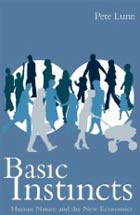
As is my destiny I suppose, I stumbled into another book (ok, four books last week, and another three yesterday) that I am now two-thirds through. Pete Lunn, a neurocientist, BBC journalist, turned economist wrote Basic Instincts: Human Nature and the New Economics,

 
which is as one reviewer notes:

       "A trained neuroscientist, Lunn came to economics late, bringing with him the psychologist's belief that the first step in understanding how people operate is to watch them behave. He was surprised to discover instead that economists found their theories on a set of assumptions - namely, that people are rational agents, with independent and well-defined goals, which they pursue with intelligence, selfishness and consistency." [Tom Clark, The Guardian, October 31, 2008].

Lunn writes in an easy, non-academic style as this engaging, more recent [2012] seven minute video talk   'How behavioural economics can be used for good - or ill' in Dublin, Ireland illuminates.


Video for pete Lunn

In the book, Lunn lays out many holes in the fundamental assumptions of neoliberal economics, and how the newer field of behavioral economics is identifying how people really act, not upon some mythology, but on observation of what people actually do. Lunn shares that there are at least six flaws that prevent the market from working as marketologists dream. Using the appropriate acronym MISLED those flaws are:

Mistakes
Information (lack of true)
Surprises - the unpredictable
Luck
Events
Dishonesty

Lunn's prose style reminds me much of physicist/author Leonard Mlodinow (Drunkard's Walk: How Randomness Rules Our Lives, and Subliminal: How Your Unconscious Mind Rules Your Behavior). Clear, humorous, self-deprecating and very insightful. I'm not done yet, so I'm hoping he ends with some 'possibilities' of how to use this new knowledge to reconfigure an economic system that is driving us to the brink...  stay tuned..

The other books that have found there way home with me over the past week include:

Best Buddhist Writing of 2009 - (I've enjoyed the 2012 and 2011 versions very much and have read about half of these short pieces. They are just short, juicy morsels of reflections that help center one in a turbulent world).
The Best Buddhist Writing 2009
No-Nonsense Guide to Fair Trade - I'm half way done with this newest in a series of mini-paperbacks published by the New Internationalist magazine that in 136 small pages gives history, development, and prognosis for the fair trade movement.
Cover
The Ascent of Humanity: Civilization and the Human Sense of Self - Charles Eisenstein' earlier work reissued. While a heavier tome in the number and size of the pages, Eisenstein's writing and insights are worth savoring. I've not yet started this one.
 The Ascent of Humanity

And three I picked out yesterday...

Andrew Dobson's Listening for Democracy - this newest from one of the leading political scientists [British] in the world and a leading proponent of an expanded idea of Citizenship aims at a topic I'm intrigued with -listening.

 Listening for Democracy Recognition, Representation, Reconciliation

David D. Cooper's Learning in the Plural: Essays on the Humanities and Public Life - a compilations of a retired faculty member and colleague I knew at MSU who was concerned with the public good and the role of the university and scholars with it. 
 Learning in the Plural cover

The Solidarity Economy Alternative: Emerging Theory and Practice - a collection of essays by those involved in the emergent 'solidarity economy from around the planet, mostly from Brazil and South Africa and the networks of solidarity being built from the grassroots up.