This is the text of a talk presented today for a Faculty Forum at Michigan State University. I dedicate this talk to our colleague Bonnie Bucqueroux who left us suddenly and too early. Bonnie, we're trying to carry you load. Your inspired life keeps us going.Be Kind. Be Connected. Be Unafraid.
======================
I prefer this gathering today to be a conversation
hopefully propelled by my remarks. I hope to keep them to about 30-40 minutes
so we have lots of time to play in the weeds. My comments today are based not only on my reading of the
literature but from experiences collected over a lifetime of being engaged in
governing. I was active in university governance as a member of Academic and
Faculty Council for many years; as a member of the University Committee for
Academic Environment, the Faculty Affairs Committee, and the Anti-Discrimination
Judicial Board, which I chaired for two years; and I founded and led the
University Committee for a Sustainable Campus for many years.
I was also elected and served as a county commissioner
and have served on a number of boards of nonprofit organizations and have
served as chair of several. Finally, I have served as an executive director
reporting to a board. So I can say I’ve looked at boards from both sides now,
as the Joni Mitchell song from the 60s voiced. Some of you probably also recall that I ran
unsuccessfully for the MSU board in the last election.
While there is a temptation for me to simply look at this
topic from the lens of best accepted practices of governing boards, I want to
take the opportunity to take a look from 70,000 feet, the level from which
Francis Gary Powers flew his U2 flight to spy on the USSR in the early 60s.
Like him, I could be shot down attempting this. But bear with me. I will get
back to university boards before I finish.
What
Is Education For?
At least every generation, societies and institutions should
ask themselves, “What is education for?” That is certainly at least a 70,000-foot
question. But I submit that how we answer this question should inform how we
choose to govern those enterprises responsible for carrying out that mission. I
would further propose that the answer cannot be a static one. For as another singer from the 60s opined, “The Times,
They Are a Changin”. They were changing then and they are changing now.
Different times call for different responses, although there might well be some
types of responses we can argue are timeless or, at the very least, worthy of
holding on to for longer periods of time (for who can predict the future with
any level of certainty?).
This notion that today’s answer to “What is education for?”
might be different from the 1960s or the 1800s arrived at my door when I viewed
a talk by mathematician/cosmologist Brian Swimme. In it he noted that the world
of Plato, Aquinas, Newton, and Darwin was starkly different in a fundamental
way from our current time. As smart as those four fellows were, they were
looking at a world through a different lens, one that might not apply precisely
to our own world. So even if we were to use their best knowledge, if the
fundamental assumptions of their world don’t translate to our world, then
perhaps some knowledge or even the way we acquire and transfer knowledge might
need to be re-examined.
What is one fundamental way our world differs from
theirs? Our world is even different from the one I was born in more
than half a century ago. Swimme points out this indisputable fact: Humans are
now sufficient in number and power that we alter the bio-geo-chemical systems
of the earth that make human life possible. Sit with that difference for a
minute. Humans are now sufficient in number and power that we alter the
bio-geo-chemical systems of the earth that make human life possible This was
not the case in Plato, Aquinas, Newton, or Darwin’s world.
We are collectively now so powerful that we are changing
the biosphere at an accelerating pace. Climate change is just one facet of that
reality, species decline along with ecosystem deterioration worldwide (see the
2003 UN Millennium Ecosystem Assessment) another. And what responsibility must
we shoulder for future generations given this new reality? Should we really
unquestionably accept that the nature of education and the other human systems
that have gotten us this far should remain unaltered as we address the world we
face today?
I submit that we should not. Of course, I wouldn’t throw
the baby out with the bathwater. We have acquired knowledge and even a fair
dose of wisdom over the ages, even if we have not always heeded it. Not all knowledge
and wisdom were found simply through the rigors of science. We need to continue
to sift through it to see what pertains to our shared dilemma of managing a human
family on a finite planet. I believe that our education must address that very
basic challenge.
MSU’s longest serving president, John Hannah, gave us a possible timeless answer to what
education might be for in our time, as inscribed on his statue in front of the
Administration Building bearing his name. "If educators are agreed
on anything, it is that the fundamental purpose of education is to prepare
young people to be good citizens." I
think “citizen” is the key word. And while Hannah served later as US.AID
administrator and was a global thinker, he could not yet realize that we were
entering/creating a different world when he laid out that call for preparing
good citizens.
The
idea of citizenship is most often seen as a national orientation, as in a
citizen of France or Burundi. Of course, we are also citizens of a community,
politically defined or otherwise. East Lansing and Lansing just elected new
representatives a week ago. We are also members/citizens of other communities –
colleges, churches, civil society organizations. But in these communities we
don’t often act like citizens but as followers.
Our
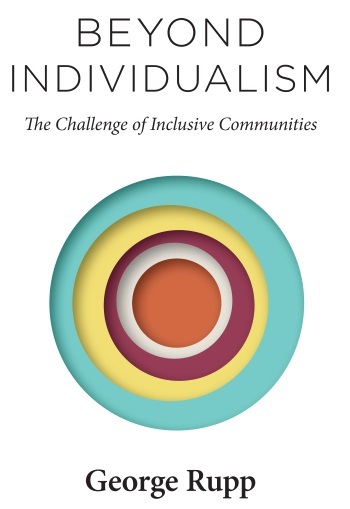
idea of citizenship must shift to what George Rupp calls for in his recent book
Beyond Individualism: The Challenge of Inclusive Communities (New
York: Columbia University Press, 2015). Rupp, former Dean of the Harvard
Divinity School and past president of both Rice and Columbia Universities as
well as president of the International Rescue Committee, believes our current
predicaments call for building more inclusive communities.
Seeking
ever greater inclusion may seem like little more than the utopian aspiration of
a head-in-the-clouds idealist. I plead guilty to being an idealist in both the
philosophical sense … and also in the more down-to-earth meaning of not easily
settling for so-called "realistic" solutions to pressing problems.
But seeking greater inclusion cannot only be an aspiration that idealists
cherish. It is also an imperative if the international community is going to have
any prospect of addressing the crisis of sustained conflict among communities
that share a common location. For that reason, the quest for greater inclusion
is a worthy ideal and also a practical requirement
(p.182).
Given
this new reality that Swimme has helped me see, our idea of citizenship must
expand from a local/national view to include at least the entire human family,
if not our kin with other forms of life we share this planet with. With all
this comes the appreciation that our world is not only expanding and
accelerating but increasing in complexity. In my mind, this complexity requires
a realization that “co-intelligence” is a necessary ingredient for moving
forward. There is no expert who can see clearly the nature and dynamism of
complex relationships in a swiftly changing universe. We must do this together.
Now,
herein, I think, lies a crucial rub, especially for higher education. The
acquisition of higher degrees confirms upon the recipient a belief in one’s
expertise. And while that confirmation holds some merit as defined by the guild,
that expertise is quite limited in its application in a rapidly changing and
complex environment. Nonetheless, there is a tendency to assume a broader
expertise to such pedigree than is warranted. When this occurs an arrogance can
arise that precludes the possibility of considering alternative frames with
which to view the challenges before us. The exclusivity of a club is the
antithesis of the inclusivity Rupp suggests is needed. A new humility must reduce the arrogance that prevents
better choices from being thoughtfully considered. Education must help us
realize how much we don’t know, more than how much we think we know.
We have elevated the mind and reason over other ways of
knowing, believing that wisdom can only be acquired through practicing and
performing mental gymnastics. Arne Naess, Norwegian philosopher, logician and founder of
the philosophy of deep ecology, noted
in his final book (written at age 90) that he had neglected the importance of
emotion in learning and understanding our world. Life’s Philosophy: Reason and Feeling in a Deeper World is his attempt
to address this shortcoming.
A popular metaphor that perhaps captures the crucial purposes
of education is the tripartite one – head, hands, and heart. Our educational
system surely needs to integrate all three in what I suspect is a dynamic
balancing act. It is pretty clear that we have overstated the head while
ignoring, even discarding, the importance of learning with the heart and the
hands.
One
last point on the purpose of education I must make. Again, this seems most
pertinent to our current approach to higher education. In a widely viewed TED
talk, Sir Kenneth Robinson offers four purposes of education -
economic, cultural, social, and personal. And he goes on to explain them and
why they are necessary and how, with the possible exception of the economic, we
are largely missing the other three. Recently an American Political Science
Association Task Force on Democracy, Economic Security, and Social Justice in a
Volatile World made a similar point. Democratic Imperatives: Innovations in
Rights, Participation, and Economic Citizenship. Washington: American Political Science
Association, 2011.
Recent events call for
urgent reexamination of the central tenets of neoliberal economic orthodoxy,
including the faith in the wisdom of a self-regulating market. They have eroded
the legitimacy of many democratic governments by exhibiting these governments’
subservience to financial capital and demonstrating the seeming capacity of
representative institutions to address systemic challenges. They also have
directly challenged the political and economic foundations of traditional
social welfare programs. (pp. 6-7)
Higher education scholar Ronald Barnett makes an
insightful claim that might move us from this neoliberal environment towards a
more democratic and sustainable one.
Ideas of the university in the public domain are hopelessly impoverished.
'Impoverished' because they are unduly confined to a small range of possible
conceptions of the university; and 'hopelessly' because they are too often
without hope, taking the form of either hand-wringing over the current state of
the university or merely offering a defense of the emerging nature of 'the
entrepreneurial university'....
Why does this matter, and why does it matter at this particular time? At the
very moment when the idea of the university should be opening out, it seems to
be closing in, at least in the public imagination. The idea of the university
has, of course, undergone many shifts and been subject to varying conceptions
over time. For some hundreds of years, the idea of the university was - as it
might be said - that of the metaphysical university, reflective of inquiry that
enhanced humanity's connections with God, or the Universe, or Truth, or Spirit,
or even the State. That conception gave way to the research university, which
is now giving way to that of the entrepreneurial university, which in turn is
closely allied to the emergence of a tacit idea of the corporate university.
What
is striking about this conceptual journey that the idea of the university has
undergone - over nearly one thousand years - is that it has gradually shrunk.
Whereas the metaphysical university was associated with the largest themes of
humanity's self-understanding and relationships with the world, the idea of the
university has increasingly - and now especially in its entrepreneurial and
corporate incarnations - closed in. The entrepreneurial university is expected
to fend for itself, and attend to its potential impact on particular segments
of the economy, and become distinctive. This university has abandoned any
pretense to be associated with universal themes.
The idea of the university has closed in ideologically, spatially and
ethically. Ideologically, the contemporary envelope of ideas encourages the
university to pursue quite narrow interests, particularly those of money (in
the service of a national - or even a global - knowledge economy); spatially,
the university is enjoined to engage its region, especially with industrial or
business organizations in its environs (increasingly its students are also
'local'); and ethically, the university has become focused on its own
interests. It will, as a result, close departments of chemistry or physics or
modern languages or philosophy because it sees such closures as serving its own
(usually financial) interests rather than their being laced in a set of public
interests.
(pp.1-2) Ronald Barnett. Imagining the University. London: Routledge, 2013
Barnett goes on to urge a ‘re-imagination’ of the
university, to consider “feasible utopias,” but he fails to look specifically
at the role of governance. Let me give that a try now.
Do
Our Forms of Governance Enable What We Need Public Universities to Do?
Given this backdrop, what might we consider as an
effective and sustainable form of governance for public higher education? How
do our structures, processes, and rules for governing higher education work
today? Well, of course, every institution has its own culture, so one needs to
be careful in prescribing a generic view of governance for all entities. I have
worked at various scales and recognize that scale of operation is important to
how we organize them to be effective and responsive. We’ll stick here to public
universities. But from the outset of trying to lay out a form of governance,
let me try and follow John Dewey’s dictum that the solution to problems of
democracy is more democracy!
In Michigan, our constitution defines the legal scope for
governance of public universities in the state constitution (Article VII,
Section 5). “Each board shall have
general supervision of its institution and the control and direction of all
expenditures from the institution’s funds.” It says nothing further about
the actual form and practice of governance beyond the board’s role in selection
of the president and a requirement to submit an annual accounting of all income
and expenditures to the legislature. So in essence we are free to construct a
governance system that is shared and more deeply democratic. But in practice we
see that we don’t. It is common to see decisions and directions driven from the
top, not from the grassroots, and usually not even from the elected board.
Almost all power has been absorbed by the president and his/her selected
administrative team. In large part, this
arrangement follows from the fact that university boards are voluntary and very
part-time positions -- trustees meet as
a whole only a few times per year.
We see this in MSU’s own Bylaws for Academic Governance,
which list four types of authority:
Consultative, Advisory, Shared, and Delegated. But even in the
definition of Delegated authority it states:
“A
deliberative body of faculty and/or students is authorized to make decisions on
specified matters. Such decisions are subject to administrative review.”
In my experience, much of the supposedly “delegated”
authority to the faculty over curriculum is largely trumped by administrative
decisions and fund allocations that constrain possibilities. But even in this
subset of the arena, large portions of the community (students and staff) are
invisible. In fact, cultures and practices are developed around status
differences – e.g., faculty/staff, tenured/non-tenured, tenure stream/temporary,
graduate students/undergraduates, with administrations seemingly happy to have each
group trying to protect its perceived narrow interests instead of addressing
the larger question of who and how we govern our institution. The current
system enables concentration of power.
The reliance
on boards for direction is further harmed, in my view, by the fact that rarely
do board members have any experience working in higher education. Rather, they
are often political appointees, frequently alumni who have succeeded in
society’s eyes in some other field of endeavor. Even in public electoral
systems, the parties choose their candidates based not on experience or ability
but largely on party activism or contributions.
There is no unimpeachable reason to allow a small elite
to run our public universities, especially if given the purpose of education is
to prepare good citizens. To not include stronger participatory governance is
anathema.
Who
Decides and What Are the Rules?
The rules as set by the state constitution are minimal,
as noted earlier. In a quickly changing world, how is the institutional direction
arrived at? The American Political Science Association has recently shown a
renewed focus on promoting civic engagement and participatory governance.They go to some length in their 2013 Teaching Civic Engagement: From Student to Active Citizen to
address how the college classroom could empower students to become voters and
become engaged in public policy. In 2011 an APSA task force was convened in
response to the 2008 global economic and financial crisis. Their report
mentioned earlier, Democratic
Imperatives: Innovations in Rights, Participation, and Economic Citizenship was
a positive, forward looking one.
Crises are moments of great
intellectual opportunity: they unsettle conventional wisdom, disrupt political
complacency, offer unexpected insights, and pose difficult and uncomfortable
questions in urgent ways. (p.6)
They go on to point to the direction that is needed.
One of our “aims
is to draw attention to some crucial themes and objectives these three areas
share: deepening democracy; enhancing collective and individual agency;
reducing poverty; achieving greater equality of wealth, income, power, respect,
influence, legal status, or opportunity; and cultivating solidarity in
democratic communities. We view these as imperatives for revitalizing democracy
in the volatile world.”(p.7)
While each of these reports has some good analysis and
positive suggestions for formal classroom teaching, they fall short in my
opinion regarding the institution’s own governance model. It’s as if as parents
we tell our children, “Don’t do what I do, do what I say.” We teach one thing
by our talk, another by our deeds. If democracy and participatory governance
are good for a nation and society, why wouldn’t it be good for any
institution?
More deliberation across more quarters would seem to
better tap the co-intelligence of the entire institution. Doing so
transparently would also allow for the larger community (citizens/taxpayers of
the state) to react and respond in support or in opposition to the
institutional direction. Instead we see,
as an example, the recent search for a new president at EMU, in which all board
discussions of candidates are taking place behind closed doors with faculty,
staff and students excluded.
Enhancing
Participatory Governance: Some Possibilities
What might we consider to improve the participation in
governance in public universities that would strengthen our democracy and
heighten our sense of citizenship? How might we empower all stakeholders to
engage as agents of positive change? Might we, for example, apply the approach
of the World Social Forum that calls all interested parties to the table to
shape and even lead the discussions? We are really talking about empowering all
members of the community connected with the institution to engage in chartering
its course. Can you imagine students hosting forums on student debt, sexual
harassment, residence hall options, transportation, and/or student employment
and then crafting proposals and advocating for them?
What if staff asked why they are excluded in governance, as
were women and blacks in the first century of our own democracy?
The findings of the APSA in looking at the promise of
participatory governance in other spheres should warrant work at applying
similar structures within public universities and other institutions. For
example, they highlighted participatory budgeting as presenting multiple
benefits. The process engages a larger community and imbues each participant
with a deeper appreciation of the constraints of revenues and expenditures on
possible choices. It also allows for a broader range of possible approaches to
emerge that would otherwise be buried in the pessimism of the hopeless.
Let me use a few possible examples extrapolated from my
own board of trustee campaign platform.
We might collectively deliberate over the maximum wage
ratio and minimum wages to be shared among the employees. It is currently
roughly 180:1. Are we forced to accept this?
What about the creation of a committee representing
faculty, staff and students that would annually review MSU’s endowment
portfolio and vote on shareholder resolutions for those equities we own to make
sure they aligned with the university’s mission?
What if decisions about any expansion, physical and/or
programmatic, needed a minimum of two-thirds majority of all stakeholders
before they could proceed?
How about an annual review of campus sustainability
performance (using a national standard like STARS) that was then discussed
across campus, with solicitation for ways to enhance that performance?
What if the president of the university was elected
directly by faculty, staff, and students after public forums with the
candidates?
What if the same university community were to nominate
candidates for the board for election by the citizens of the state?
What if there were more campus forums on urgent community
and global issues followed by plebiscites on the subjects and proposals
discussed?
What if students and staff were required as part of their
orientation to learn how the university operates and how to effect change?
What if collectively faculty, staff, and students studied
and practiced various emerging forms of dialogue, deliberation, and conflict
resolution approaches and continuously reviewed them for application?
What if students had to demonstrate significant
involvement in local or community policy issues to graduate?
What if we discussed global issues, learning from the
perspectives and experiences of our visiting students and scholars from abroad?
Can’t involvement in governance process be credited
equally with other activities of faculty, staff and students, so that more
members of the community might be willing to participate? Active involvement in
governance needs to be has highly valued as any other criteria in annual
assessment, not treated as a lesser activity than teaching or research or other position
responsibilities.
Creating
the Conditions That Enable
Ultimately governance should create the conditions to
enable learning that fulfills the mission.
Yes, along the way there are facts
to be learned. But there is judgment to be honed that recognizes the complexity
and connectedness of a single human family on a finite planet. Seeking knowledge that will help us all
become better citizens and create more inclusive communities will be more
enduring if we increase the participation in our own institutional governance.
The public university as a laboratory for democracy is a huge public necessity.
How we choose to learn our way forward together is up to us. It begins with the
recognition of our own empowerment. There is nothing preventing us from being
the change we want to see in the world.
Let me close with two short excerpts. The first is from
political science professor Joan Tronto’s
Caring Democracy: Markets, Equality and
Justice.(New York: NYU Press,
2013)
What we see if we peek over the wall is the possibility of a world in which our
capacities to care for ourselves and others will increase only if we have the
courage to admit that we need, and will benefit from, recognizing the large web
of caring relationships within which our lives gain meaning.
There is a
way to turn our world around. It requires us to recommit to caring for
ourselves and others by accepting and rethinking our caring responsibilities
and providing sufficient resources for care. If we are able to do this, then we
will be able to enhance levels of trust, reduce levels of inequality, and
provide real freedom for all. In such a society, we would have to conclude,
with Giambattista Vico (1990): "What is justice? It is the constant care
for the common good."
Finally, from Rebecca Solnit’s Hope in the Dark:Untold Histories, Wild Possibilities. (New York: Nation Books, 2005.
I say all this to you
because hope is not like a lottery ticket you can sit on the sofa and clutch,
feeling lucky. I say this because hope is anax you break down doors with in an
emergency; because hope should shove you out the door, because it will take
everything you have to steer the future away from endless war, from the
annihilation of the earth’s treasures and the grinding down of the poor and
marginal. Hope just means another world might be possible, not promised, not
guaranteed. Hope calls for action; action is impossible without hope. At the
beginning of his massive 1930s treatise on hope, the German philosopher Ernst
Bloch wrote, “The work of this emotion requires people who throw themselves
actively into what is becoming, to which they themselves belong.” To hope is to
give yourself to the future, and that commitment to the future makes the
present inhabitable. -



 The phrase becomes the rallying cry of the insurrection that takes place in what would seem to be the not too distant future - a time when climate change and income inequality have grown even more visible and troublesome than they are today. It's a dark period, but the optimism of the everyday people who become forces for change drives the story.
