Wednesday, September 21, 2016

Getting Wasted

I have been meaning for months to raise the issue of the great waste ignored by us in this community. There are numerous reminders, but the one that sets me off the most is the ongoing construction near the MSU Federal Credit Union’s headquarters off State Road and US 127.

Driving by the rising structure one can’t help but notice that there must be a minimum of 100 lights (it could be three times that number) burning 24/7 including all through the night and weekends  when no one is there.  For the sake of easy math let’s estimate those are 100 watt bulbs and that there are 100 of them. That means every hour they are using 10,000 watts. Let’s assume there are people working in that space 48 hours a week. That leaves 100 hours a week when no one is there. That means there are one million watt hours of electricity wasted weekly.

My memory tells me this has been going on for months, but let’s just say 10 weeks. So  over that time 10 million watt hours of electricity up in smoke. Some readers will say,” who cares”, the owners or the construction company are paying for it. But alas, we are all paying for it. Tell the folks in Baton Rouge suffering from 1,000 year rain event;  in Syria, where the droughts moved farmers into the cities creating the kindling for the eruption that is the Syrian tragedy;  in California, where wildfires destroy square miles of vegetation and homes. The cumulative impact of our consumption over time has changed our atmosphere.

It is one thing to use energy when we NEED to. But to waste it needlessly is a crime, or should be. I know those lights don’t need to be left on. Drive by a similar three story structure going up across in the area, where no lights are burning at night. Each of us of course, myself included, leave energy sucking items on when  they are not being used. Many of us recall our stern fathers telling us to turn the lights off when we leave a room. President Carter encouraged businesses to turn off their outdoor  lighted signs when they were closed during the oil embargo of the late 1970’s to save energy.

While individual actions matter, especially when added up by the thousands or millions, larger organizations, like the  example I began with, have a more dramatic impact. The electricity wasted in two months by that building would power our house for 2,500 years or 2,500 homes like ours for one year.

But waste is not limited to just electricity and power. Food waste is another major problem that we have failed to address adequately.  By some estimates 30-40 percent of food grown is wasted.  USDA is calling for 50 per cent reduction in food waste by 2030. Locally, Woody Campbell of Compost Katie, is trying to rescue food waste from the landfill and turn it into compost that could be utilized as soil amendments, thereby closing the loop.
Compost Katie

Campbell, who started the successful local Green Cab company years ago, is trying to develop a model of rescuing surplus food that is not edible from households and businesses and stimulate more waste reduction. Talk about entrepreneurship that is really needed, this is a great effort. His weekly  pickups of your food waste has 5/25 gallon options. In nature, there is no waste. Campbell is taking a 'waste' and turning it into compost for enriching the soil, completing nature's cycle.

Of course, recovery of edible food has long been the focus of “Food Movers”, a program of the Greater Lansing Food Bank since the early 90’s that works with local restaurants, bakeries,  grocery stores, and catered events to get surplus edible food to those who need it in shelters and community kitchens.

Screen Shot 2013-11-04 at 12.51.56 PM
The mantra that has guided the recycling community for decades is “Reduce, Reuse, and Recycle”. Notice that recycling is the last of the hierarchy. Reduction and reuse are of a higher order in reducing the impacts of our consumption. To waste is to squander or to use carelessly or inefficiently.  We can’t afford to waste materials or human lives. The over consumption, especially among the developed countries of the world cannot continue without suffering further consequences from Mother Nature and the dispossessed.

We can either choose to work with nature and becomes its partner, or to allow the consequences of our wasteful habits to be hoisted on to the backs of our children and grandchildren. The bumper sticker slogan, "Nature Bats Last" is a fundamental truth.

Waste Not!!

Turn it off when not being used!!!

Sunday, September 11, 2016

Speeding Past Complexity and Nuance

As the handful of readers who have visited this blog a few times are likely to notice, I write a lot of things sparked largely by what I read. While some of those reflections are sparked by essays, articles, blogs or shorter pieces, the majority I believe ( although I haven't done a content analysis of the 200+ blog entries scratched out over the last four years) are from books. I've been averaging about 20-25 non-fiction books a year for the past four years or so. And any frequent visitor to this site will note they cover largely political science, philosophy, economics, psychology, theology, environmental science, and international relations.

I finished Thomas Weiss's 2014, Governing the World: Addressing Problems without Passports today.


 I am partly through the following titles I alternate between:

Jan Scholte, et. al New Rules for Global Justice: Structural Redistribution in the Global Economy


John Harris, How to be Good: The Possibility of Moral Improvement
Cover for 

How to be Good

Anthony Flaccavento, 
Radhika Balakrishnaan, Rethinking Economic Policy for Social Justice
9781138829152.jpg

William Guadelli, Global Citizenship Education
Global Citizenship Education: Everyday Transcendence (Paperback) book cover

I note this not to display how widely read I am, but to note my own curiosity to better understand the world we share and how we might better reshape it. In each of these books and in all that I have noted in this blog over the years, they share at least one thing in common.


They are willing to wrestle with complexity and nuance. 


Let me cite just one example from Weiss' book this morning. Weiss is a Presidential Professor of International Relations at CUNY Graduate Center. Weiss' book is a relatively short 101 pages of text looking at the feasibility of creating a more effective global governance system. To support his ideas he marshalls more than 240 references, some of course from the same source, but a quick review shows the vast majority of references are unique citations. Reading books with this type of serious thinking and scholarship opens the reader up to complexities and nuances on the topic we would likely miss without the more lengthy space to develop the ideas. (I was told in a former position that if I wanted my reports to be read by upper level administrators they had to have a one page bullet-point summary. The likelihood of them reading the entire report was about nil).

With social media we're now down to 140 characters. Lost in this fast paced race to decide is any real ability to investigate complexity and nuances. Busy administrators, CEO's, elected officials rely on the shorthand version of reality, where those at the table or who have the loudest voice get to have their points raised, but others are left out.

I am fearful as I watch this presidential election campaign move forward, that there will be no room for educating voters about complexity or nuance. The world is painted as black or white, red or blue. Campaigns are built largely on sound bytes to fit the 30 second advertisement, the bumper sticker, the brand and much of it aimed at how bad the other candidate is. Even the upcoming debates (?) promise nothing much different. There is absolutely no commitment to build any deep understanding about issues and the type of decisions and processes we need to employ to come up with workable solutions.

It is perhaps, at least partly, but I would suggest, significantly, because politics has become more of a game, where winning is the only thing. Any way one wins is acceptable. I don't see any long-term benefit from this approach to governing. The process celebrates, if not feeds, public ignorance. Our mass media is in part to blame. The purchase of elections through media sound bytes is surely part of the problem. 

But if we could see elections as a chance for candidates to find common ground instead of bludgeoning their opponent for a misstep, we might increase our chances to craft solutions that stand before us as a human family on a finite planet.Scoring points from simplistic statements is a poison that we might hope education could provide and antidote. 

Appreciating scholarship and how it can help us see the complexity and the interdependencies that surround us,I am reminded of  a fine little film my wife and I watch last night, The Man Who New Infinity, a 2015 film on the life of Indian mathematician, Srinivasa Ramanujan who lived in the early 20th century. We see the struggle of using rigor to strengthening our understanding of the world we share. Reading book length analyses can help us all gain a needed does of humility. We have much to learn, together.

Beware the simplistic statements from candidates.


Tuesday, August 23, 2016

Reading is Democracy

I was reading from the pile of books stacked nearby earlier this morning, John Harris’ How to Be Good: The Possibility of Moral Enhancement (Oxford University Press, 2016) It’s a philosophical treatise that I bumped into on the new book shelf a few weeks back.

Cover for 

How to be Good

 As I was reading it, I kept reflecting on, “why am I drawn to read books like this?” What is it in me, that draws me to such questions, when I see few others with such interest? Where did that magnetism originate? Why do I pursue philosophical questions even though the intellectual rigor that is required to fully digest the arguments is lacking in me?

Harris,  (FMedSci., FRSA., B.A., D.Phil., Hon. D.Litt. Lord Alliance Professor of Bioethics and Director, Institute for Science,  Ethics and Innovation, School of Law.) has written extensively on issues of moral questions, and has numerous quotable passages from within the first 40+ pages I’ve nibbled on thus far.

        George Orwell, as I fondly recall, referred to this reliance on intuition or emotion as the use of “moral nose”; as if one could simply sniff a situation and smell or feel the rightness or wrongness. The problem is that nasal reasoning is notoriously unreliable and difficult to assess objectively, and olfactory ethics, despite being widely practiced, has never really taken off as an academic discipline. Despite this lack of a theoretical base, so to speak, olfactory moral philosophy has many contemporary adherents.” (p.29)

        ...As I have argued elsewhere, someone who cares about doing the right thing, someone for whom the difference between right and wrong is important, will always want to ask him or herself if what feels right is right. They will want to assure themselves insofar as it is in their power, they really are acting well or for the best all things considered, that seems right is right. They will, in short, be interested in a critical distinction, emphasized by no less a reflective thinking being than Hamlet himself, in this famous riposte to his mother: “Seems, madam? Nay it is. I know not ‘seems’.” The difference between what seems and what is in ethics can only be delivered by reasoning. (p.30)


Like his Shakespeare quote, Harris is exceptionally well-read, pulling quotes from many authors of various disciplines. One of which caught my eye enough to track it down and read this morning , Philip Pullman’s “Writing is Despotism, but Reading is Democracy.” It is a gem of a piece for anyone who appreciates reading and it reminds me somewhat of why I am drawn to books like How to be Good.

Tuesday, August 9, 2016

We Are What We Eat/Read

We took our son, Noah and his partner, Andy, to dinner last night at a new Thai restaurant in Detroit, Katoi. 

The menu was unique to my culinary experience. The mix of tastes and combinations of ingredients was so distinctive, that I could not possibly imagine what these combinations might taste like.
katoi_som_tum_thai_night_test.jpg


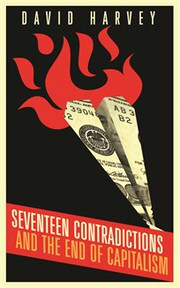
I was struck this morning while reading from two different books on my table: David Harvey’s Seventeen Contradictions and the End of Capitalism (Oxford, 2014) 

Seventeen Contradictions and the End of Capitalism

and Rethinking Economic Policy for Social Justice: The Radical Potential of Human Rights  by Radhika Balakrishnan, James Heintz, and Diane Elson (Routledge, 2016).

Rethinking Economic Policy for Social Justice

Like reading the menu last night, I had no clear picture on what reading from either of these books this morning might taste like. While each of these two books pulled from the pile have some focus on economic policy, they are totally different in orientation and style.

But reading each of them triggered numerous thoughts, including an urge to write something about how the menus of our life change as the available ingredients are in either surplus or scarcity.  Reading this morning took me back to several other recurring thoughts that have seeped into this feeble brain over the past few months.
For instance, while in the actual world the economy is the wholly owned subsidiary of our environment and social world, it is pragmatically dominant to both. Which leads me to believe that solving our inequality and climate change challenges must focus on our economic policies. But as Balakrishnan and colleagues assert, this process must be based upon true democratic process of “public reasoning” to borrow from Nobel laureate Amartya Sen. In spirit, that’s what this blog has had at its heart from the beginning some 200 plus entries ago. Can we consider alternatives,  other “possibilities” to our arrangements that will, in Balakrishnan’s et. al. view, help all of us achieve the human rights that the family of nations has concurred with in the UN Declaration of Human Rights?

Human rights are indeed about individual freedoms. This is a critical aspect of the way human rights frames issues of social justice. But the human rights framework insists that full realization of these rights requires a strong state, international cooperation, and robust social institutions. It recognizes that claiming individual rights demands collective action and responsibility. The human rights approach ensures individual freedoms – including economic, social, and cultural rights, as well as civil and political rights. But there must also be a collective responsibility, exercised through the state, and through cooperation between states for realizing these individual rights. (p.6)

 Other thoughts followed from this including an infatuation I have with the idea of organizing, through some grant assistance, an annual parallel public budgeting process that would mirror the federal budgeting process that beings with the President’s budget release in late January, early February. My idea is that it would transpire over a month or two beginning with a day of looking at existing revenues and expenditures and their trends over time. This overview would be led by  economic and political aware presenters. Following this would by a weekend of a public discussion of values that should guide development of a budget. From this would follow a process akin to Participatory Budgeting where a random group of participants would be selected to draft two or three versions of a “People’s Budget”. These options would then be made available for discussion and vote.

The importance is that this becomes an annual local event. It helps inform the citizenry about the tradeoffs and challenges in allocating resources and collecting revenues. It would subsequently, through media coverage – including of course social media --  impact public policy makers as to the popular will of the people, through a more “public reasoning” process.

Now as I glanced at the other books on my table that I have been alternating between over the past couple of weeks other ideas break through the soil:

William Gaudelli Global Citizenship Education: Everyday Transcendence (Routledge, 2016)
Global Citizenship Education: Everyday Transcendence (Paperback) book coverHow might we reshape education to improve the chances those who follow can build a more socially just and equitable world to live in? 

Joseph Siracusa Nucear Weapons: A Very Short Introduction (Oxford, 2015)
Can we eliminate nuclear weapons and use the savings, including the $1 trillion our peace President proposes to spend over the next 30 years on them, to help reach the recently agreed upon Sustainable Development Goals?

Colin Tudge Six Steps Back to the Land: Why We Need Small Mixed Farms and Millions More Farmers (Green Books, 2016)
Six Steps Back to the LandIf we are to reduce our footprint on our ecological systems before they collapse, is not a return to small, local, mixed, caring farming essential?

Michael McLeod (ed.) The Best Buddhist Writing of 2008 (Shambala, 2008)
The Best Buddhist Writing 2008How important is personal transformation to the change we need to see in the world? Does one proceed from the other?

Joseph Schwartzberg Transforming the United Nations System: Designs for a WorkableWorld (United Nations University Press, 2013)
1230 Schwartzberg – Transforming UN System FINAL Front CoverIs it even possible to create a more violent free world without some form of collective/shared responsibility and governance like the United Nations? How might we move such ideas forward to center stage in a world of nation states committed to competition and dominance?

Charles Derber and Yale Magrass Bully Nation: How the American Establishment Creates a Bullying Society (University of Kansas Press, 2016)
Bully NationDo the systems that drive us endorse bullying and domination, and if so, does it guarantee losers along with winners? Is this something we can live with or need to challenge?

Many questions continue to circulate on a daily if not hourly basis in this head. I don’t know what is on tomorrow’s menu, but I’m confident that some new taste experience is out there. We are what we eat and to some extent what we read. What's on your bookshelf?

Sunday, July 31, 2016

The Exceptional Bully

Upon glancing at our local Sunday paper this morning, I realized why what appears to be a majority of the public, knows little of the rest of the world. It rarely exists in the pages of local media. I suspect my rather late recognition of the obviousness of this observation was jolted to consciousness as a result of the recent political conventions and three current titles in my possession.

I just finished H. Peter Langille's Developing a United Nations Emergency Peace Service this morning


 and have begun Joseph Schwartzberg's Transforming the United Nations System: Designs for a Workable World.
1230 Schwartzberg – Transforming UN System FINAL Front Cover
For the two national conventions the focus was solely on our exceptionalism. If other nations and their people even exist it must be as terrorists or economic competitors. There was no mention of the United Nations or any global effort to address the challenges facing us as a human family on a finite planet. There is Trump's personal exceptionalism belief, and Clinton's American exceptionalism dogma. My realization aligns well with the third new book on my reading table, Charles Derber and Yale Magrass' Bully Nation: How the American Establishment Creates a Bullying Society. 


I find it astounding that there is almost no discussion of the need for global responses to the challenges that face us. That there really is, if you read the paper or watch the politicians, only the U.S. to save the world. If you are Donald Trump supporter, you likely add him to the savior list. That we might even conceive of building a global democracy seems inconceivable if you listened to any of the speeches at either convention. Yet, without the albeit imperfect United Nations more of the global fabric would be torn and tattered than we find it today. We need to strengthen it not ignore it.

     We profoundly constrain our ability to imagine alternative, brighter futures if we insist that               every single proposal be weighed down by the heavy ball and chain of "PPP" -- present                   political possibility. Nothing will ever become politically realistic unless someone first declares         it to be politically desirable -- and proclaims it, however distantly, as an eventual historical               goal. If politics, as every freshman knows, is the art of the possible, then political change ought      to be about expanding the boundaries of future possibility. (Tad Daley, as cited in Langille p.94) 


Langille has tackled the boundaries of future possibility of a global peace service with this important work. He has studied and built on all the efforts that have brought us thus far in an efforts by the human family to govern ourselves. His proposals seem sound and surely the need has never been greater.

IRCtoP
Image result for international coalition for the responsibility to protect

The International Coalition for the Responsibility to Protect notes in a stunning infographic of the 60,000,000 displaced persons for the huge need for security and shelter. 42,500 persons are displace EVERY DAY. That somehow we might think we can continue to ignore this issue without blowback seems foolish. Ignoring this accelerating nightmare won't have it go away. Bless the many civil society roups and the UN High Commissioner for Refugees for doing what they can with limited resources.

I find some solace that there are networks of people around the globe who are working to make the concept of a global democracy a human security a political possibility, knowing with much evidence that it may not occur in their lifetimes. But it is through the aspirations voiced by the global community through the auspices of the United Nations system that lead us towards a better world.
Image result for sustainable development goals

Last fall's global agreement on the Sustainable Development Goals (SDG's) is perhaps just the latest version. Agreeing to those 17 goals with aspirations to achieve them by 2030 is a significant step. It surely doesn't mean we will get there, but if we can collectively agree to aim there, our chances  improve. Such is the spirit that spurs Langille to tackle reasonable approaches to creating global standing and standby forces that can be sent quickly into emergency situations, whether they involve conflict, disasters, or any emergency need where we have a responsibility to protect the vulnerable. Goal number 16 is PEACE. Langille helps us move towards it.

One additional possible positive consequence of developing such a peace service could be less need for individual nations to spend so much on their own separate military forces, thus allowing funds to be used for human development and environmental protection.

While I'm not far enough into to Schwartzberg's book to give any kind of synopsis, I can speak to the insights that professors Derber and Magrass are making in Bully Nation. While they applaud the rising interest in dealing with schoolyard bullies through counseling and for both the bully and the bullied, they believe that the emphasis on bullying as a psychological issue misses the larger social systems that conspire to nurture a bullying culture. I am not far enough into it to relay their arguments sufficiently, but already I sense some solid truth in their analysis.

With Donald Trump playing the bully role to the max these days, perhaps he will help us awaken to our own nation's bullying efforts which we seem to believe are appropriate because we are exceptional. We need to come to the realization that we're all in this together soon. These three books help us see the way forward to fulfilling that idea. Read on....